






Journal
Cheekbone Reduction Surgery Korea 2026: Elizabeth's Real Transformation and Full Zygoma Guide
2026-03-13
Facial Contouring
Cheekbone Reduction Surgery Korea 2026: Elizabeth's Real Transformation and Full Zygoma Guide
Summary
- Medical: Cheekbone reduction surgery Korea reshapes prominent or wide zygomatic bones into a smoother, more oval facial line, most often for roughly 40 to 60 percent less than comparable surgery in the United States.
- Technology: Korean surgeons lead the world in the L-shaped osteotomy cheekbone reduction technique, frequently performed with ultrasonic piezoelectric bone cutters that selectively cut dense bone while protecting nerves and soft tissue.
- Care: Through Docfinderkorea's Full-Care Agency model, which combines Direct Surgery Monitoring, In-Person Hospital Accompaniment, All-Inclusive Recovery Care, and a 24/7 Premium Concierge, international patients such as Elizabeth from Chile are guided from the very first message to their final follow-up.
Quick Facts: Cheekbone Reduction Surgery in Korea (2026)
- Surgery duration: about 1 to 2 hours under general anesthesia.
- Main technique: L-shaped osteotomy of the zygomatic body and arch, in Low-L or High-L variations.
- Incisions: hidden inside the mouth with a tiny point near the sideburn, leaving no visible facial scars.
- Fixation: titanium plates and micro-screws hold the repositioned bone for stable, sag-free healing.
- Major swelling: eases within 1 to 2 weeks, with most patients ready for desk work around day 10 to 14.
- Final result: roughly 80 to 90 percent of the new contour by 3 months, fully settled by about 6 months.
- Recommended stay in Korea: about 10 to 14 days.
- Cost guidance for 2026: roughly USD 4,000 to 9,000, compared with USD 10,000 to 20,000 in the United States.
Table of Contents
- Why Patients Choose Cheekbone Reduction Surgery in Korea
- Cheekbone Reduction Surgery Korea: The Medical Edge in 2026
- Elizabeth's Story: From a Round Face to the Oval She Dreamed Of
- Why Elizabeth Chose a Full-Care Agency, Not an App
- How to Book Cheekbone Reduction Surgery in Korea: Step-by-Step
- Zygoma Reduction Korea Cost 2026: Global Comparison
- Cheekbone Reduction Surgery Recovery Timeline: Week by Week
- The Seoul Recovery Lifestyle
- FAQ: Cheekbone Reduction Surgery in Korea
- Your Next Step
- Related Articles
Why Patients Choose Cheekbone Reduction Surgery in Korea
South Korea has become the world's reference point for facial contouring, and cheekbone reduction surgery Korea is one of the most requested procedures among international patients who travel to Seoul. The country performs an enormous volume of facial bone work every year, which means its surgeons are not occasional operators but specialists who refine the same procedures thousands of times. For a prospective patient, that concentration of experience is the single biggest reason to consider Korea: the person holding the instrument has almost certainly treated a face very much like yours before.
It helps to be clear about what cheekbone reduction surgery is and is not. It is a bone-contouring operation that reduces the width and forward projection of the zygomatic bone, the structure that gives the cheek its prominence. It is not a weight-loss procedure, and it does not remove fat or change your skin. If your face looks wide or angular because of the underlying bone, cheekbone reduction can genuinely soften that line into a smoother, more oval shape. If the fullness comes mainly from soft tissue, a surgeon may recommend a different or additional approach. A good clinic will tell you honestly which category you fall into during the consultation.
Who Is an Ideal Candidate?
- Adults with naturally wide or high, forward-projecting cheekbones who want a softer, more balanced midface.
- People whose facial width makes the face look larger or more masculine than they would like.
- Patients in good general health, without active infection or untreated dental or gum disease.
- Those with realistic expectations who understand results settle gradually over several months.
Elizabeth, a patient from Chile, is a good example of exactly this profile. She had lived for years feeling that her rounded, wide face never quite matched how she saw herself, and she eventually decided to travel all the way to Korea to change it. Her journey, documented on Docfinderkorea's channel, runs through the rest of this guide, and you can watch it for yourself below.
Watch Elizabeth's journey:
Cheekbone Reduction Surgery Korea: The Medical Edge in 2026
The reason Korean results look so natural comes down to technique. Cheekbone reduction is not simply about shaving bone away; it is about cutting, moving, and re-fixing the zygomatic complex so the whole midface stays balanced and supported. Korean facial-contouring surgeons have spent two decades refining exactly this, and in 2026 the standard of care is precise, tissue-sparing, and built around long-term stability rather than a dramatic overnight change.
L-Shaped Osteotomy Cheekbone Reduction
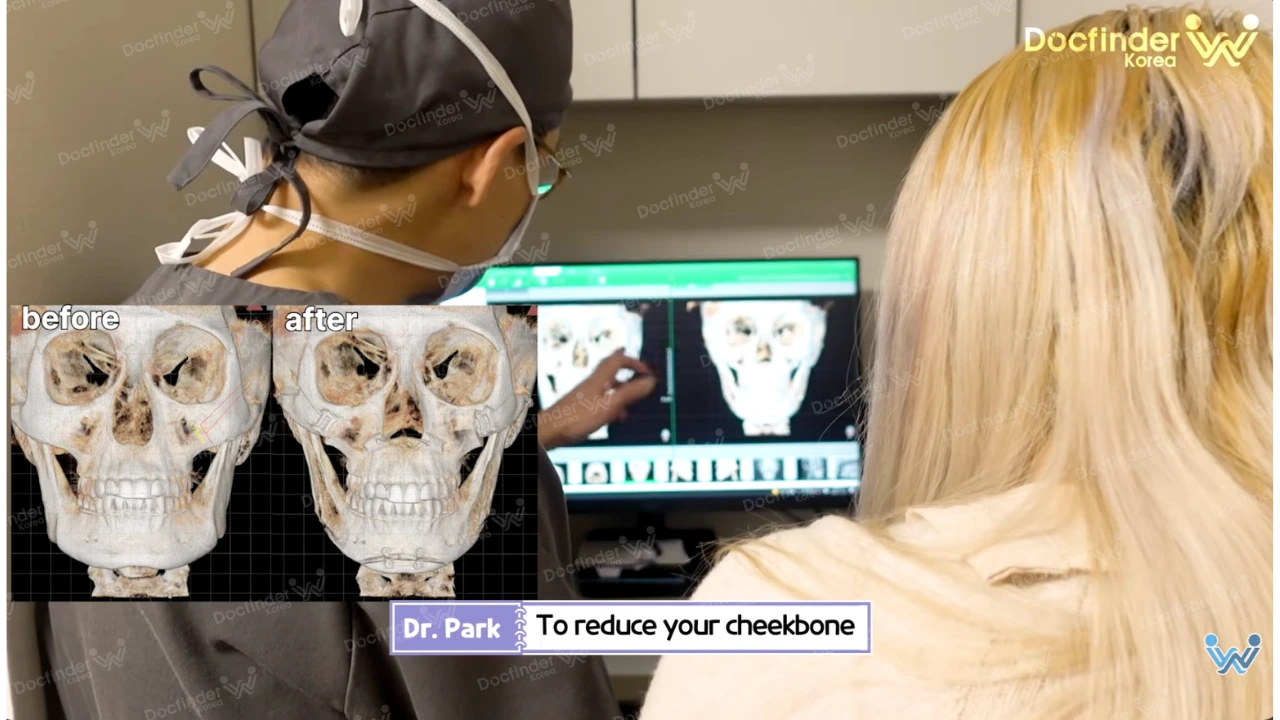
The workhorse of modern zygoma reduction is the L-shaped osteotomy cheekbone reduction technique. Through an incision hidden inside the mouth, the surgeon makes an L-shaped cut in the body of the cheekbone and a second cut at the zygomatic arch near the sideburn. The freed segment is then rotated inward and moved into a more recessed position, narrowing the face. Surgeons choose between a Low-L and a High-L cut depending on how much reduction the patient needs; the High-L approach removes a little more bone and gives a greater change for very prominent cheekbones. Because the bone is repositioned rather than merely ground down, the surface of the cheek keeps its natural shape instead of looking flat or hollow.
Piezoelectric Cutting and Rigid Fixation
Many leading Seoul clinics now perform the osteotomy with piezoelectric ultrasonic instruments. These devices vibrate at a frequency that cuts dense bone cleanly while leaving nearby blood vessels, motor nerves, and soft tissue essentially untouched, which reduces bleeding and helps protect the facial nerve. Once the bone is in its new position, the surgeon secures it with titanium plates and micro-screws. This rigid fixation is one of the most important quality markers in the whole operation: bone that is firmly fixed heals in place, avoids the drooping and sagging that worried earlier generations of patients, and keeps both sides of the face symmetrical as swelling resolves.
Safety You Can See
Korea's best clinics treat safety as something transparent, not something to warn you about. Reputable hospitals run operating rooms with CCTV so there are no so-called ghost doctors, meaning the surgeon you met at consultation is the surgeon who performs your operation. A full-time board-certified anesthesiologist stays with you throughout general anesthesia, monitoring you one to one. The surgeons who lead these procedures are certified by the Korean Society of Plastic and Reconstructive Surgeons, and Docfinderkorea works only with hospitals registered with the Korea Health Industry Development Institute. For an international patient far from home, that framework is not a risk list; it is the reassurance that lets you focus on healing.
Elizabeth's Story: From a Round Face to the Oval She Dreamed Of
Elizabeth came to Docfinderkorea with a wish she had carried for a long time. Living in Chile, more than seventeen thousand kilometers from Seoul, she had grown tired of a rounded face shape that she felt made her look heavier and softer than the person she felt she was. She had researched facial contouring for years, and every serious road led to the same place: Korea, where cheekbone reduction and jaw contouring are performed at a level of specialization that simply is not matched at home. So she made a decision that thousands of international patients make each year, and she booked her journey to Korea.
Her plan was not a single procedure but a coordinated facial-contouring plan: cheekbone reduction to narrow the wide midface, V-line jaw surgery to slim and refine the lower face, and lifting to keep the newly contoured skin smooth and taut. Treating the cheekbones, jawline, and skin together is central to the Korean philosophy of facial harmony, in which the surgeon looks at the relationship between the forehead, cheekbones, jaw, and chin and aims for one seamless, fluid line rather than fixing a single feature in isolation. For Elizabeth, that meant her rounded face was not going to be traded for an over-narrowed one; it was going to be rebalanced.
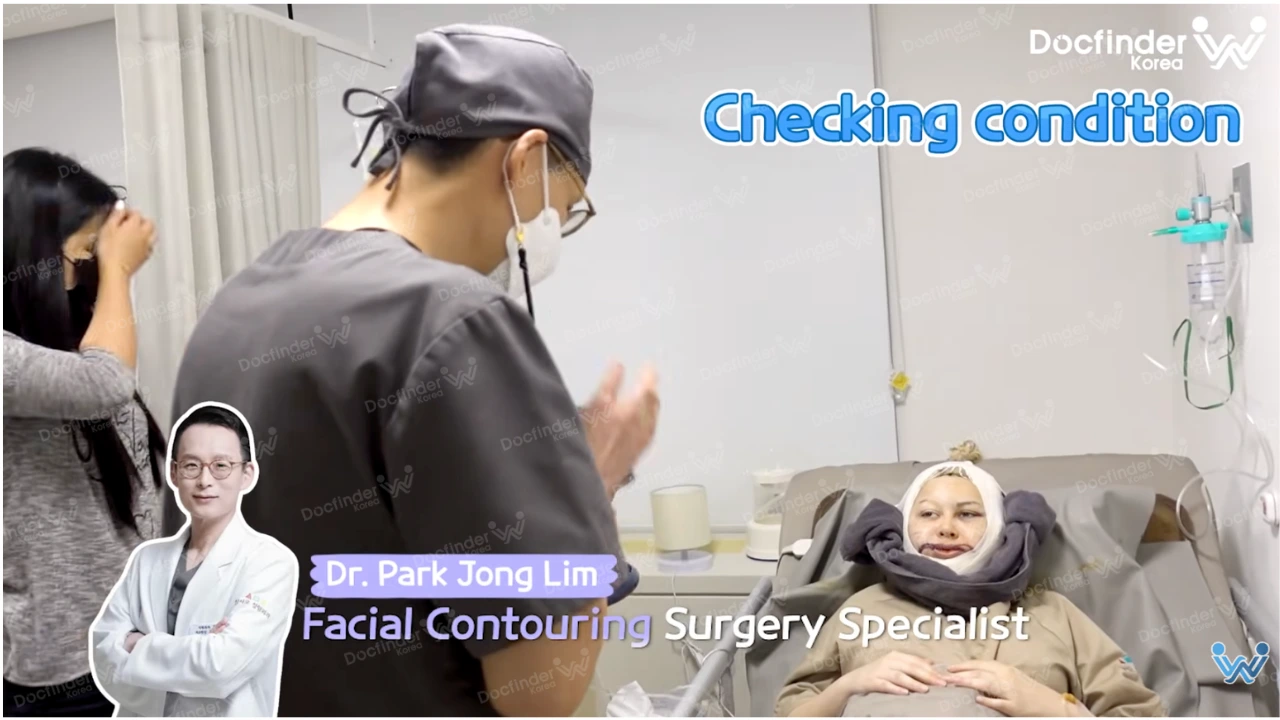
Arriving alone in a country whose language she did not speak could have been overwhelming. It was not, because she was never actually on her own. From the airport onward, a Docfinderkorea coordinator was with her, translating every medical conversation, sitting beside her through the pre-operative consultation, and making sure the surgeon understood precisely the natural, softer look she wanted rather than an extreme change. When she was wheeled into the operating room, her decision felt supported rather than lonely, which for a patient far from family is worth as much as any piece of equipment.
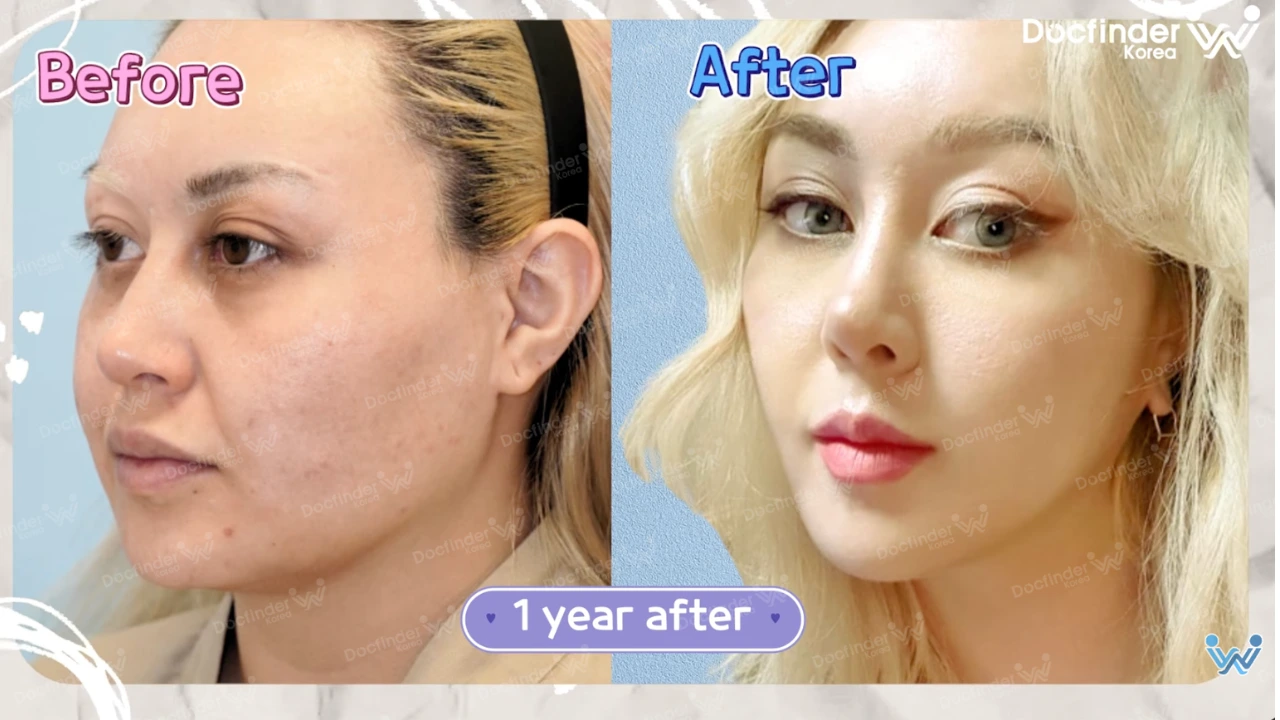
The transformation did not appear the moment she woke up. Like every cheekbone reduction patient, Elizabeth spent the first days visibly swollen, and it took patience to trust that the shape underneath was changing. But as the weeks passed and the swelling melted away, the face in the mirror became the one she had imagined for years: an oval, balanced line where there had once been width and roundness. In the Docfinderkorea account of her journey, the change is described simply and movingly, that she finally achieved everything she dreamed of and is no longer concerned about her face shape. For someone who had spent so long self-conscious about a single feature, that quiet confidence was the real result of the surgery.
Elizabeth's story matters because it is not a rare best case; it is what a well-planned facial-contouring trip is supposed to look like. A realistic goal, an honest consultation, a specialist surgeon, and continuous support turned a daunting solo trip across the world into a manageable, even reassuring, experience. The surgery reshaped her cheekbones, but the structure around it, the planning and the people, is what made the outcome feel safe.
Why Elizabeth Chose a Full-Care Agency, Not an App
Many patients begin their research on Korean booking apps such as Gangnam Unni or Babitalk. Those platforms are useful for browsing, but they are built for domestic users who can read Korean, attend consultations easily, and go home to their own bed and their own family afterward. They are essentially book-and-go marketplaces. For someone flying in from Chile, the United States, or Europe, that model leaves the hardest parts, language, logistics, advocacy, and recovery, entirely on the patient's shoulders. This is the gap a Full-Care Agency is designed to close.
Docfinderkorea is registered with Korea's Ministry of Health and Welfare and acts as the patient's advocate rather than the clinic's salesperson. Its care rests on three pillars. Direct Surgery Monitoring means a coordinator confirms that the surgeon you chose is the one operating and observes that your agreed plan is followed. In-Person Hospital Accompaniment means someone is physically beside you at consultations, on surgery day, and at follow-up visits, translating and asking the questions you might not know to ask. All-Inclusive Recovery Care means your aftercare, deswelling visits, medication, and logistics are organized for you instead of left to chance in an unfamiliar city.
Wrapped around those pillars is a 24/7 Premium Concierge, so a worried question at two in the morning reaches a real person, not a message queue. Just as importantly, this support comes at no extra cost to the patient, because the agency is paid by its partner clinics rather than by you. That arrangement lets an international patient like Elizabeth arrive with the confidence that every part of the journey, medical and practical, already has someone responsible for it.
How to Book Cheekbone Reduction Surgery in Korea: Step-by-Step
The path from first inquiry to flying home is more orderly than most people expect. A typical cheekbone reduction journey with Docfinderkorea follows seven stages.
- Free online consultation. You send photos and your goals through the Docfinderkorea inquiry form, and the team advises whether cheekbone reduction, or a combined plan like Elizabeth's, suits you.
- Airport pickup. On arrival in Seoul you are met and taken to your accommodation, with your coordinator already briefed on your case.
- In-person consultation. You meet the surgeon for 3D imaging and a detailed plan, with a coordinator translating and confirming the natural result you want.
- Surgery day with Direct Surgery Monitoring. The operation takes about 1 to 2 hours under general anesthesia, with a full-time anesthesiologist and your agency monitoring the plan.
- First recovery days. You rest with the heaviest swelling in the first few days, supported by scheduled check-ins and the 24/7 concierge.
- Stitch removal and deswelling. Intraoral stitches are checked and removed, and deswelling care helps the new contour emerge as you approach the end of your stay.
- Fly home and follow-up. After roughly 10 to 14 days you travel home, and the team stays in contact for remote follow-up as your face continues to settle.
Zygoma Reduction Korea Cost 2026: Global Comparison
Price is one of the first questions every patient asks, so here is honest guidance on zygoma reduction Korea cost 2026. In Seoul, cheekbone reduction generally ranges from about USD 4,000 to 9,000, which at today's exchange rate of roughly 1,480 to 1,490 Korean won to the US dollar corresponds to about 6 to 13 million won. The exact figure depends on how much reduction you need, the surgeon's seniority, whether you combine the procedure with V-line or lifting as Elizabeth did, and the clinic itself. Treat any single number online as a starting point, not a quote; a real price only comes after a consultation and 3D assessment.
How Korea Compares Worldwide
The value becomes clear against other countries. In the United States, comparable cheekbone reduction typically runs USD 10,000 to 20,000, roughly double or triple the Korean range, largely because of higher facility and surgeon fees. In Thailand the cost sits closer to Korea, often USD 4,000 to 7,000, while Mexico tends to fall around USD 4,500 to 8,500. European centers in countries such as the United Kingdom or Germany often reach USD 8,000 to 15,000. What sets Korea apart is not being the single cheapest option but pairing competitive pricing with the deepest specialization in facial bone surgery in the world. The very cheapest tiers anywhere usually carry a cheap-but-risky trade-off in experience and aftercare that is rarely worth it for permanent bone surgery on your face.
It is also worth knowing what the Korean price usually includes. All-inclusive packages commonly cover the consultation, the surgery and anesthesia, hospital charges, medication, and a set of follow-up and deswelling visits. When you add a modest budget for flights and roughly two weeks of accommodation, the total for a fully supported trip to Seoul still tends to land well below the surgeon's fee alone in the United States, which is a large part of why patients like Elizabeth conclude the journey is worth it.
Cheekbone Reduction Surgery Recovery Timeline: Week by Week
Understanding the cheekbone reduction surgery recovery timeline removes most of the anxiety, because swelling that looks alarming on day three is completely expected and temporary. Here is how a typical recovery unfolds, mirroring the path Elizabeth followed.
Days 1 to 3
You rest with your head elevated to limit swelling, which peaks in this window. A soft or liquid diet protects the healing bone, and prescribed medication keeps discomfort manageable. This is when the concierge and accompaniment matter most, because you simply want someone else handling logistics while you recover.
Week 1 to 2
The intraoral stitches are removed, usually within the first week, and the sharpest swelling begins to subside. Most patients feel presentable enough for light outings and desk work around day 10 to 14, which is exactly why the recommended stay in Korea is about two weeks. This is normally when international patients fly home.
Weeks 3 to 8
Residual puffiness continues to fade, and the new facial line becomes clearly visible to you and to others. Numbness around the cheek, which is normal as the small sensory nerves recover, steadily improves. Strenuous exercise is still avoided through roughly the first month to six weeks.
Months 3 to 6
By about three months you are seeing roughly 80 to 90 percent of your final result, and by six months the bone has fully settled and nerve sensation has largely returned. This is the point at which patients like Elizabeth describe simply forgetting about their face shape, because the contour has become permanent and natural.
The Seoul Recovery Lifestyle
Recovering in Seoul is unexpectedly comfortable, and the city almost seems designed for it. Korean post-surgery culture leans on gentle habits such as drinking pumpkin juice, known as hobakjeup, which patients sip to help reduce swelling, and a calm routine of rest punctuated by short walks. Gangnam, where most contouring clinics cluster, puts pharmacies, deswelling clinics, soft-food restaurants, and cafes within a few minutes of one another, so nothing about daily recovery requires a long or stressful trip.
For an international patient, the quiet advantage is that the concierge handles the logistics of all of this. Appointments for deswelling care, transport to and from the clinic, refills, and translation are arranged so that your only job is to heal. Elizabeth spent her recovery days doing exactly that, resting and watching her new contour emerge, rather than navigating a foreign medical system alone. That is the difference between merely having surgery abroad and being properly cared for abroad.
FAQ: Cheekbone Reduction Surgery in Korea
Will cheekbone reduction make my face look completely different?
No. Done well, it softens and narrows the midface while keeping you recognizably yourself. The Korean philosophy of facial harmony aims for balance, not for a dramatic or artificial change, which is precisely the natural result Elizabeth asked for and received.
How much does cheekbone reduction cost in Korea?
Guidance for 2026 is roughly USD 4,000 to 9,000, compared with USD 10,000 to 20,000 in the United States. Your exact price depends on the extent of reduction, the surgeon, and whether you combine procedures, and is confirmed only after consultation.
Which technique is best, Low-L or High-L osteotomy?
It depends on your bone. The High-L osteotomy achieves a greater reduction for very prominent cheekbones, while the Low-L suits more moderate cases. Your surgeon recommends the right one after 3D imaging.
How long do I need to stay in Korea?
Plan for about 10 to 14 days. That covers surgery, initial recovery, stitch removal, and enough deswelling that you are comfortable to fly home.
Are the results permanent?
Yes. Because the zygomatic bone is repositioned and fixed with plates and screws, the new contour is permanent once healing is complete at around six months.
Will there be visible scars?
No visible facial scars. The main incision is inside the mouth, with only a tiny hidden point near the sideburn, so nothing shows on the surface of your face.
Does cheekbone reduction cause sagging?
Not when it is done correctly. Rigid plate-and-screw fixation and, where appropriate, lifting keep the tissue supported. This is one reason surgeon experience and technique matter more than finding the lowest price.
Is it safe to travel for surgery alone?
Elizabeth traveled from Chile by herself and was never actually alone, because a Docfinderkorea coordinator accompanied her through translation, consultation, surgery day, and recovery. With Full-Care support, solo medical travel becomes genuinely manageable.
Your Next Step
If you are considering cheekbone reduction surgery in Korea, the simplest first move is a free online consultation. Share your photos and goals and Docfinderkorea will tell you honestly whether the procedure suits you and what to expect. As a Ministry of Health and Welfare-registered Full-Care Agency with a 24/7 Premium Concierge, Docfinderkorea guides you from your first message to your final follow-up, at no extra cost. Start your free consultation at docfinderkorea.com/quick-inquiry.
Related Articles
The Art of the Perfect Oval: A Guide to Cheekbone Reduction in Korea
Facial Contouring in Korea: Cost, Recovery, and Realistic Results
The Difference between V-line and Mini V-line Surgery: Which is Right for You?
Korean Plastic Surgery Before and After: The 2026 Guide to Real Transformations
Back