






Journal
Facial Contouring in Korea: Cost, Recovery, and Realistic Results
2026-01-22
Facial Contouring
Facial Contouring in Korea: Cost, Recovery, and Realistic Results
As the global capital of aesthetic innovation, South Korea has revolutionized the field of bone-structure surgery. Facial contouring—once a procedure primarily for reconstructive purposes—has evolved into a sophisticated art form in Seoul. For many international patients, the goal is not just a change in appearance, but to achieve a more balanced, harmonious, and refined facial structure that perfectly complements their natural features.
At Docfinderkorea, we understand that altering your facial bone structure is one of the most significant medical and personal decisions you will ever make. As a government-certified medical service provider, our mission is to ensure that your journey toward enhanced self-confidence is managed with the highest standards of safety, transparency, and world-class care.
Understanding Facial Contouring: More Than Just Aesthetics
Facial contouring is a collective term for surgical procedures designed to reshape the underlying bone structure of the face. Unlike soft-tissue procedures like fillers, Botox, or traditional facelifts—which address volume and skin laxity—contouring addresses the "architectural foundation" of your face.
In Korea, the philosophy of facial contouring is rooted in the concept of "Facial Harmony." Rather than focusing on a single feature, Korean surgeons look at the relationship between the forehead, cheekbones, jawline, and chin. The goal is to create a seamless, fluid line that enhances the patient's natural beauty without looking "overdone."
The most sought-after procedures in Korea include:
- V-Line Surgery (Korea's signature technique): A comprehensive approach combining jaw reduction and chin surgery to create a slim, tapered lower face.
- Zygoma (Cheekbone) Reduction: Moving prominent or wide cheekbones inward and backward to soften a "harsh" or wide appearance and create a more youthful mid-face.
- Square Jaw Reduction: Shaving or resecting the mandibular angle to eliminate a boxy profile and create a smoother, more feminine or refined look.
- Genioplasty: Repositioning or reshaping the chin bone to correct a receding, protruding, or overly wide chin.
The Gold Standard: V-Line Surgery and Jaw Contouring
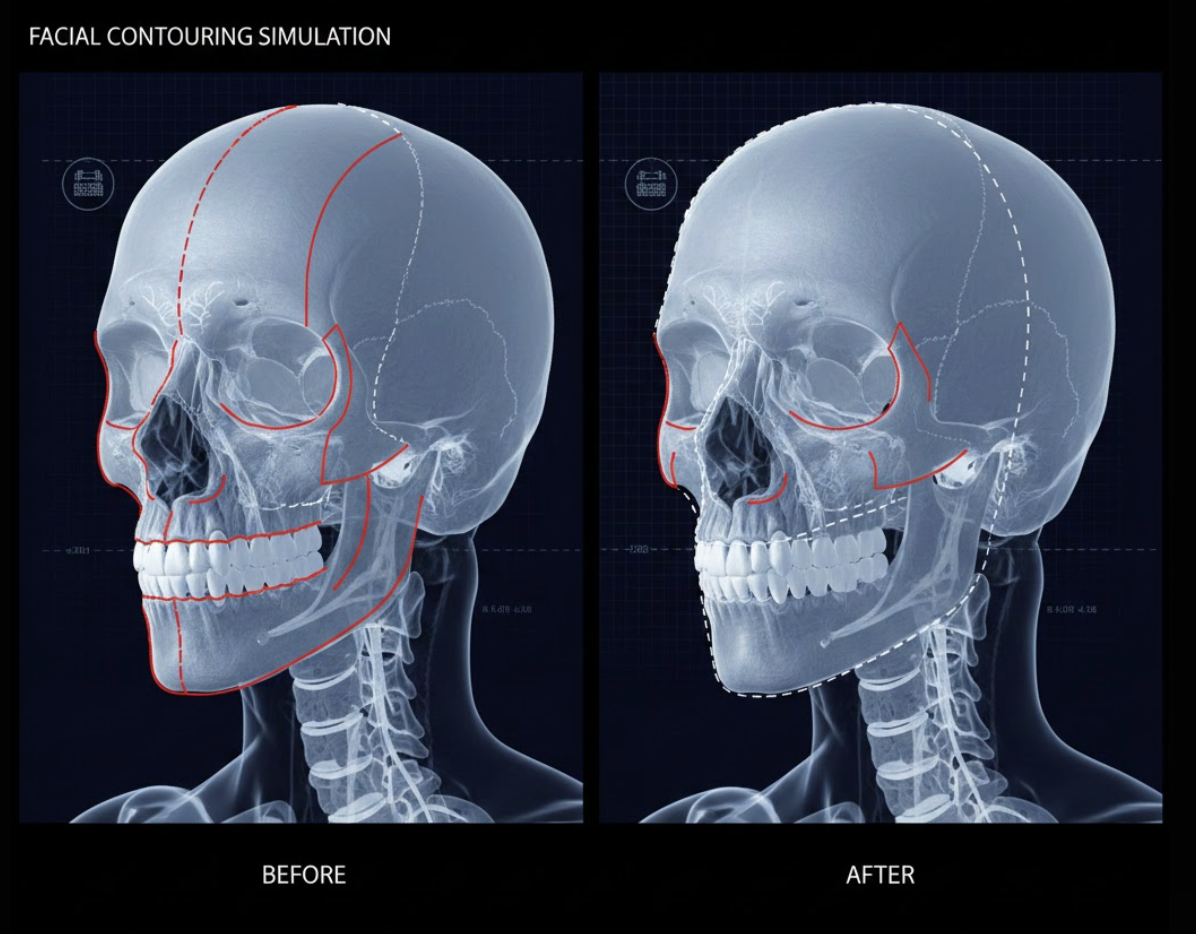
V-line surgery in Korea is world-renowned for its ability to transform a wide, square, or asymmetrical lower face into a delicate, oval shape—the "V-shape" that is highly coveted in global beauty standards. This procedure is typically a combination of two highly specialized surgeries:
1. Square Jaw Reduction (Mandibular Angle Resection)
Korean surgeons have perfected the "Long-Curve Resection" technique. Traditional jaw reduction often left a visible "step" or "secondary angle" where the bone was cut. The Long-Curve method involves a single, continuous cut from the ear down toward the chin area. This ensures a natural, smooth jawline from every angle.
Furthermore, surgeons may perform a Corticectomy, which involves thinning the outer layer of the jawbone. This reduces the actual width of the face when viewed from the front, providing a much more dramatic slimming effect than bone resection alone.
2. Chin Surgery (Genioplasty / T-Osteotomy)
The chin is the "anchor" of the V-line. To achieve the perfect taper, surgeons often use the T-Osteotomy technique. The middle section of the chin bone is removed, and the remaining pieces are brought together and secured with biocompatible titanium plates and screws. This allows the surgeon to narrow the chin, move it forward (for a weak chin), or move it back (for a protruding chin).
By addressing both the jaw and the chin simultaneously, surgeons achieve a seamless transition that looks natural and balanced with the rest of the facial features.
Zygoma Reduction: Softening the Mid-Face
High or wide cheekbones can often make a person look older, more tired, or give the face a "harsh" appearance. Zygoma reduction in Korea is performed through a technique called "L-shaped Osteotomy."
Unlike older methods that simply shaved the bone down (which often led to minimal results or skin sagging), the L-shaped Osteotomy involves cutting the cheekbone at two points, rotating it inward, and securing it in a more recessed position. This reduces the overall width of the face and creates a softer, more contoured mid-face area.
The Role of Advanced Technology: 3D CT Scans and AI
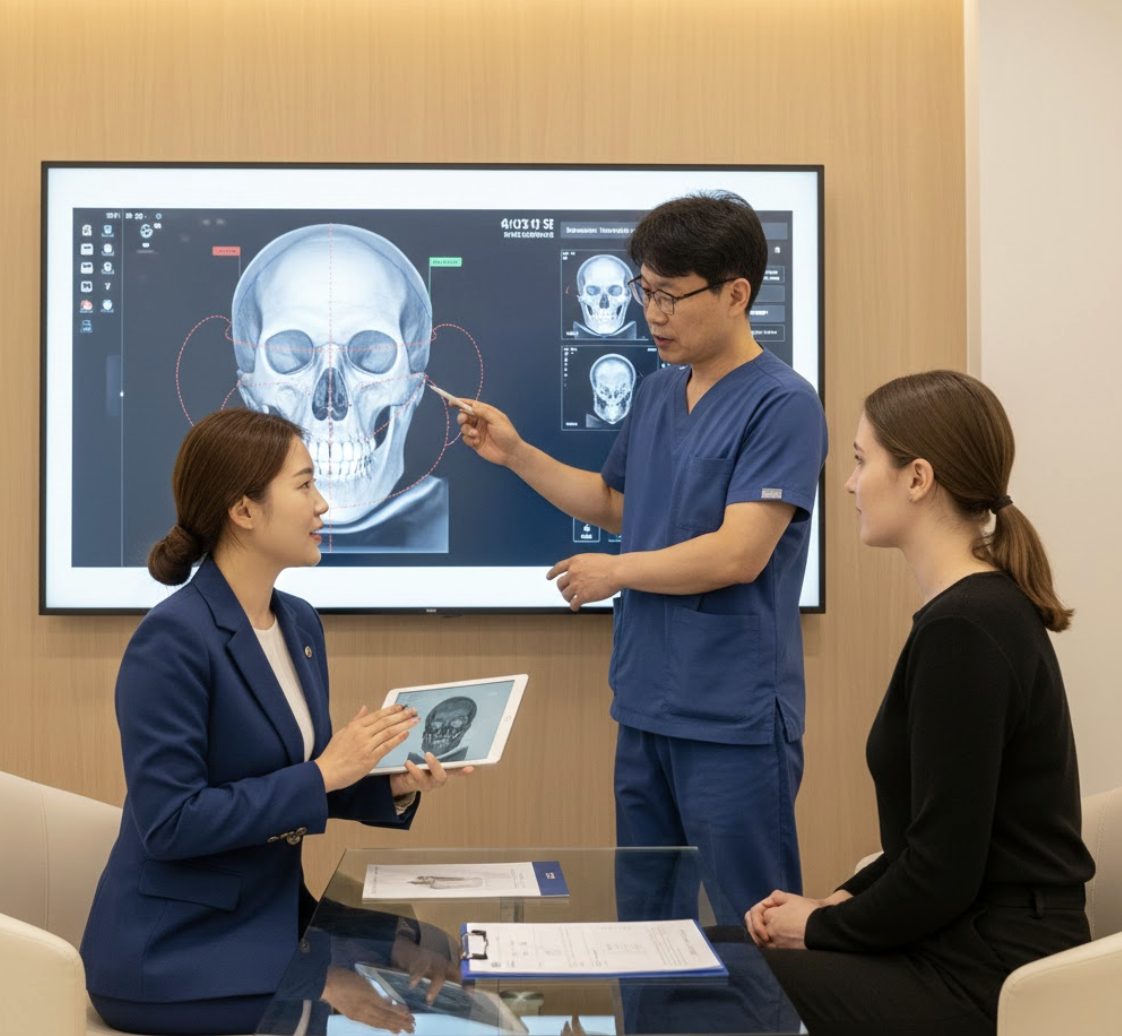
In Korea, safety and precision are driven by cutting-edge technology. Before any bone is touched, patients undergo a comprehensive 3D CT (Computed Tomography) scan. This allows surgeons to:
- Map the exact location of the mandibular nerve. Avoiding this nerve is the #1 priority in jaw surgery to prevent permanent numbness.
- Measure bone density and thickness accurately.
- Create 3D-printed surgical guides that fit onto the bone during surgery, ensuring the cuts are made exactly as planned during the virtual simulation.
Cost of Facial Contouring in Korea 2026
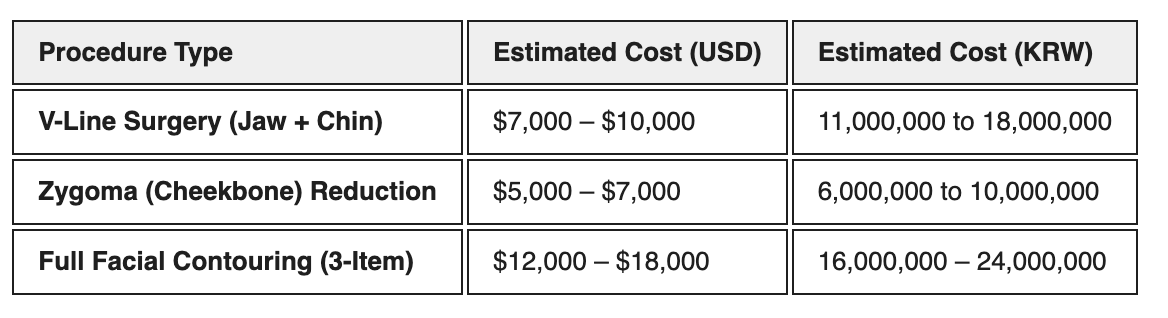
While the cost of rhinoplasty in Korea 2026 or facial contouring varies by clinic and the surgeon's reputation, Korea remains the global leader in terms of "value for expertise." You are receiving care from surgeons who perform these specific bone procedures multiple times a day, which is rare in other parts of the world.
The Recovery Journey: A Detailed Timeline
Recovery from bone surgery is a marathon, not a sprint. While the surgery itself takes 2-4 hours under general anesthesia, the body needs time to heal and for the skin to "re-drape" over the new bone structure.
Week 1: The Swelling Phase
- Days 1–3: This is the peak of "balloon" swelling. You will wear a compression garment (often called a "face bra") 24/7. Pain is usually well-managed with IV or oral medication, but you will feel significant pressure and tightness.
- Diet: Liquid only. Soy milk, protein shakes, and soups are your best friends.
- Activity: Walking is crucial. Light walking helps move the lymphatic system and reduces swelling faster.
Week 2: The Transition
- Most external stitches (if any) and some internal dissolving stitches are checked. Swelling begins to migrate downward toward the neck.
- You can usually start eating very soft foods like porridge, mashed potatoes, or scrambled eggs.
- Most international patients feel comfortable enough to go sightseeing in Seoul.
Month 1 to Month 3: The "Deswelling" Phase
- About 70-80% of the major swelling disappears. You start to see the outline of your new jawline or cheekbones.
- Residual "minor" swelling remains, particularly around the chin and nasolabial folds.
- Sensation in the lower lip and chin (if it was temporarily diminished) gradually begins to return.
6 Months to 1 Year: Final Results
- The bone is fully healed. The soft tissues have tightened around the new frame. This is when you see the "true" result of your surgery.
Safety First: Why the Anesthesiologist Matters
At Docfinderkorea, we emphasize that facial contouring is a major surgery. One of the most critical factors often overlooked by patients is the role of the anesthesiologist.
Top-tier Korean clinics employ full-time, board-certified anesthesiologists who remain in the operating room for the entire duration of the procedure. They monitor your vitals, lung function, and depth of sleep second-by-second. We only partner with clinics that have an impeccable safety record and are equipped with emergency power generators and ICU-level monitoring equipment.
Realistic Results: Managing Expectations
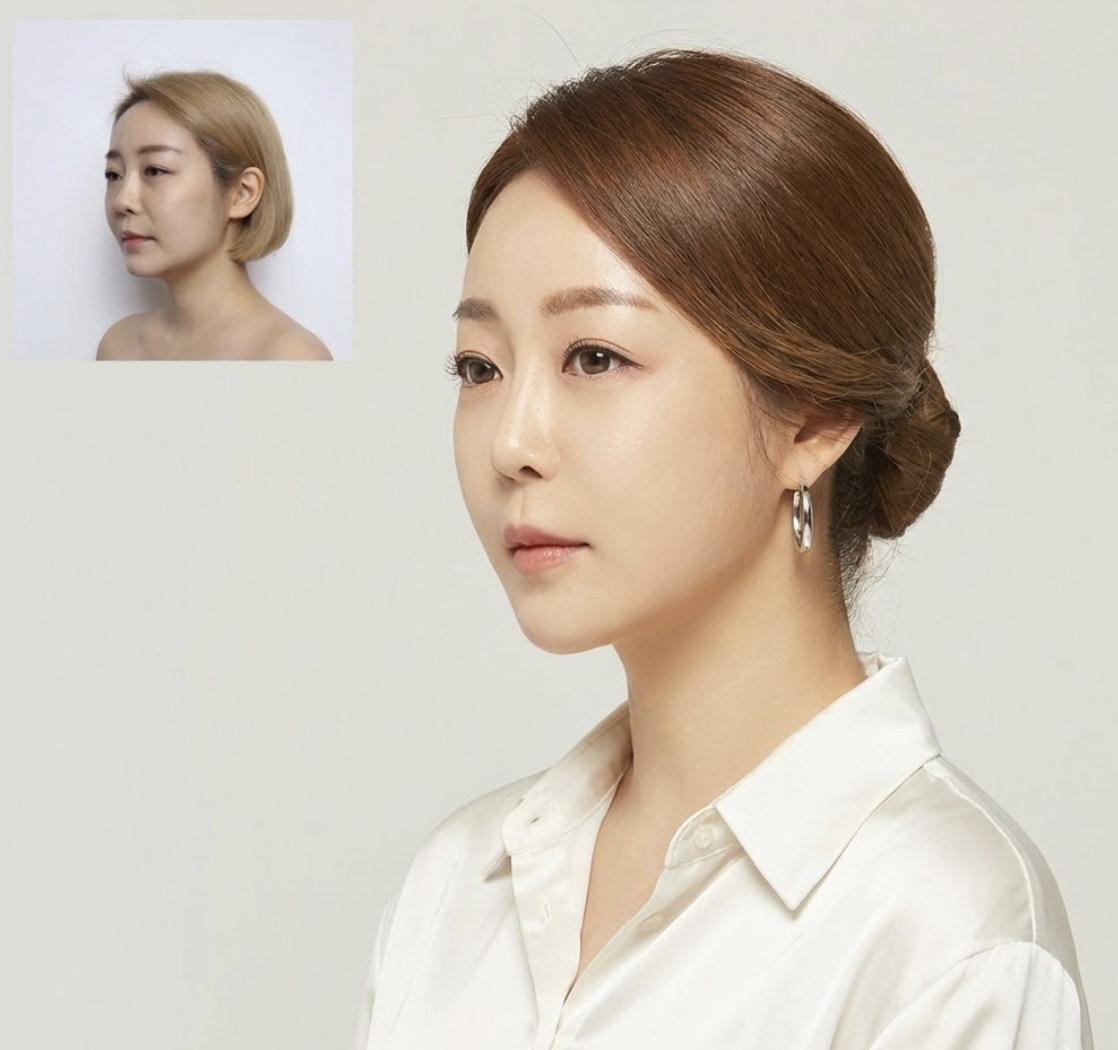
The most successful facial contouring results are those that look "natural yet improved." In recent years, the trend in Korea has shifted away from the "extreme V-line" (which can look unnatural or "alien-like") toward the "Natural-V." Surgeons now prioritize:
- Nerve Safety: Leaving enough bone buffer to ensure the mandibular nerve is never compromised.
- Structural Integrity: Maintaining enough bone to support the soft tissues and prevent premature sagging.
- Individual Anatomy: Reshaping the bone in a way that fits your specific forehead width and nose shape.
Why Docfinderkorea is Your Essential Partner
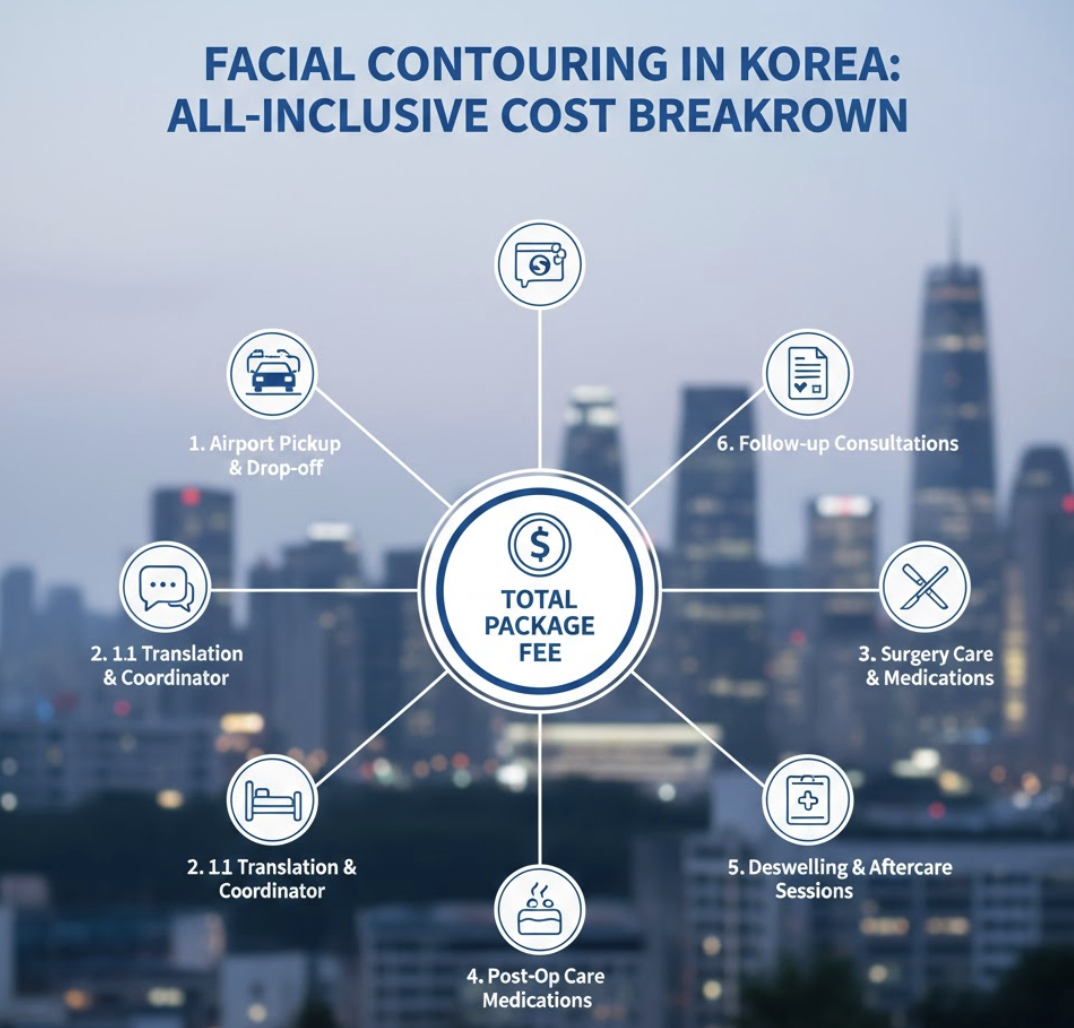
Navigating the Korean medical system as an international patient involves more than just finding a doctor. It’s about communication, logistics, and post-operative safety. This is where Docfinderkorea provides a premium, "all-in-one" experience.
- Government Certified & Licensed: We are a fully accredited medical tourism agency. This means you are legally protected, and we are held to the highest ethical standards by the Korean government.
- Completely Comprehensive Services: Our comprehensive service package—including coordination, translation, and transportation—is free for our patients. We act as your advocate to ensure you get the best surgical results at the fairest price.
- Unbiased Clinic Selection: We are not "owned" by any single clinic. We work with a curated network of the best bone surgeons in Seoul, allowing us to recommend the specialist best suited for your specific needs.
- End-to-End Support:
- Airport Pickup: A friendly face meets you the moment you land.
- 1:1 Translation: Your dedicated coordinator ensures nothing is "lost in translation" during consultations.
- Surgery Day Advocacy: We discharge you after your surgery and check on you during your initial recovery.
Frequently Asked Questions (FAQ)
Q: Does facial contouring cause skin sagging?
A: This is a common concern. For younger patients with high skin elasticity, the skin typically retracts and adheres to the new bone structure. For patients with lower elasticity or those undergoing significant bone reduction, we may recommend a concurrent "lifting" procedure, such as a Thread Lift or Accusculpt (laser fat removal), to ensure the profile remains sharp.
Q: Are the plates and screws permanent?
A: Yes, they are made of medical-grade titanium and are completely safe to stay in the body forever. They do not set off metal detectors at airports. However, if you prefer, they can be removed in a minor procedure 6-12 months after the initial surgery.
Q: How long should I stay in Seoul?
A: For facial contouring, we recommend a minimum stay of 14 days. This allows for the removal of stitches, multiple follow-up "deswelling" treatments (like LED therapy and oxygen chambers), and a final safety check before your flight.
Q: Can I combine facial contouring with other surgeries?
A: Yes, many patients combine V-line surgery Korea with rhinoplasty or eye surgery to achieve a full facial makeover in a single recovery period. This is often more cost-effective and reduces the total downtime.
Conclusion: Your Transformation Starts Here
Facial contouring is a journey that requires expertise, precision, and a supportive team. By choosing to have your surgery in South Korea, you are accessing the world's most advanced bone-shaping techniques. By choosing Docfinderkorea, you are ensuring that your experience is seamless, safe, and stress-free.
Whether you are seeking a subtle refinement of your jawline or a significant structural change, the surgeons in our network are dedicated to helping you achieve your aesthetic goals while preserving the unique essence of your face.
Ready to see what's possible? Contact Docfinderkorea today for a free virtual consultation and take the first step toward the most confident version of yourself.
Related Journals
Looking for more in-depth information about facial transformation? Explore our curated selection of guides to help you plan your journey to South Korea with confidence.
[Everything You Need to Know About V-Line Surgery in Korea] A comprehensive deep dive into the V-Line procedure: learn about the surgical techniques, materials used, and the essential checklist every international patient should review before booking.
[V-Line Surgery in Korea: Redefining Facial Harmony and Beauty Standards] Beyond simple bone reduction—discover how Korean surgeons redefine facial harmony by tailoring the lower face to match your unique features and global beauty ideals.
[The Evolution of Korean Plastic Surgery: A Deep Dive into Facial Contouring Trends] Trace the history of aesthetic innovation in Seoul. From traditional methods to the latest 3D-guided technologies, explore how facial contouring trends have evolved to prioritize natural results and safety.
Back