






Journal
Korean Plastic Surgery Before and After: The 2026 Guide to Real Transformations
2026-03-05
Eyes, Nose, Facial Contouring, Anti-aging, Body
Korean Plastic Surgery Before and After: The 2026 Guide to Real Transformations
Summary
- Medical: Korean plastic surgery before and after results in 2026 are defined by natural harmony rather than dramatic change, and Seoul’s prices run roughly 40–65% below comparable United States surgery for the same board-certified quality.
- Technology: The transformations behind the photos come from 3D-CT planning, autologous cartilage rhinoplasty, deep-plane facelift technique, and the eye work driving the rise of Korean double eyelid surgery before and after searches.
- Care: Docfinderkorea is a government-certified full-care agency — Direct Surgery Monitoring, In-Person Hospital Accompaniment, All-Inclusive Recovery Care and a 24/7 Premium Concierge — the model that carried Rowena, 50, from Sydney to Seoul and home again.
Quick Facts: Korean Plastic Surgery in 2026
- Most-searched procedures: double eyelid surgery, rhinoplasty, V-line facial contouring, and the deep-plane facelift.
- Anesthesia: sedation for most eye and nose work; general anesthesia with a full-time board-certified anesthesiologist for facelift and bone contouring.
- Planning: 3D-CT imaging and AI simulation let you preview your before-and-after outcome before any incision is made.
- Recovery milestone: stitches and nasal splints typically come out on day 5–7, with 60–70% of swelling gone by day 14.
- Result timeline: early shape at 2–4 weeks; final refined result for a facelift or rhinoplasty settles over 6–12 months.
- Recommended stay in Korea: 7–14 days for facial procedures, so your care team can remove stitches and clear you to fly.
- Cost edge: expect to pay roughly 40–65% less than United States pricing, with aftercare bundled into the quote.
Table of Contents
- Why Patients Choose Korea for Their Before-and-After Transformation
- The Medical Edge Behind Korea’s Before-and-After Results
- Korean Double Eyelid Surgery Before and After
- Rhinoplasty in Korea Before and After
- Facelift in Korea Before and After
- Rowena’s Story: From Sydney to Seoul at 50
- Why Rowena Chose a Full-Care Agency, Not an App
- How to Book Your Korean Plastic Surgery Journey: Step-by-Step
- Korean Plastic Surgery Price 2026: Procedure Costs and Global Comparison
- Recovery Timeline: Week by Week
- The Seoul Recovery Lifestyle
- FAQ: Korean Plastic Surgery Before and After
- Your Next Step
- Related Articles
Why Patients Choose Korea for Their Before-and-After Transformation
When international patients type Korean plastic surgery before and after into a search bar, they are rarely looking for a different face. They are looking for the version of themselves that always felt just out of reach — rested, balanced, and unmistakably still them. South Korea has spent two decades earning its reputation as the place where that specific kind of change happens, and in 2026 it remains the busiest cosmetic-surgery destination in the world, drawing well over a million medical tourists a year to a dense cluster of specialist clinics in Seoul’s Gangnam and Apgujeong districts.
That density is the point. Nowhere else concentrates so many high-volume, board-certified surgeons within a few subway stops of one another, each performing the same procedure hundreds of times a year. Experience at that scale is what separates a believable before-and-after from an obvious one: a nose that finally suits the face it sits on, eyes that look awake rather than surgically widened, a jawline softened into a natural curve.
What Korean plastic surgery is — and what it isn’t
It helps to set expectations honestly. Facial-contouring surgery reshapes bone and soft tissue for harmony; it is not a weight-loss tool. A facelift repositions the deep tissues of an aging face; it does not stop time or hand you a stranger’s features. Rhinoplasty refines proportion and, increasingly, breathing; it is not a copy-and-paste of a celebrity nose. The patients who love their results are the ones who arrive wanting refinement and balance, not a total reinvention.
Who is an ideal candidate?
- Adults in good general health with realistic, specific goals for a particular feature.
- People bothered by one or two things — tired-looking eyes, a nasal hump, a heavy jawline, mid-face sagging — rather than everything at once.
- Non-smokers, or those willing to pause before and after surgery to protect healing.
- Travelers who can set aside 7–14 days in Korea for the procedure and initial recovery.
Rowena, a 50-year-old from Sydney, is a good example of an ideal candidate, and her documented journey anchors this guide. Watch her full story here:
The Medical Edge Behind Korea’s Before-and-After Results
The transformations that go viral are not luck. They are the product of planning technology, tissue technique, and safety systems that have matured together. Understanding them makes any Korean plastic surgery before and after gallery far easier to read.
3D imaging and AI simulation
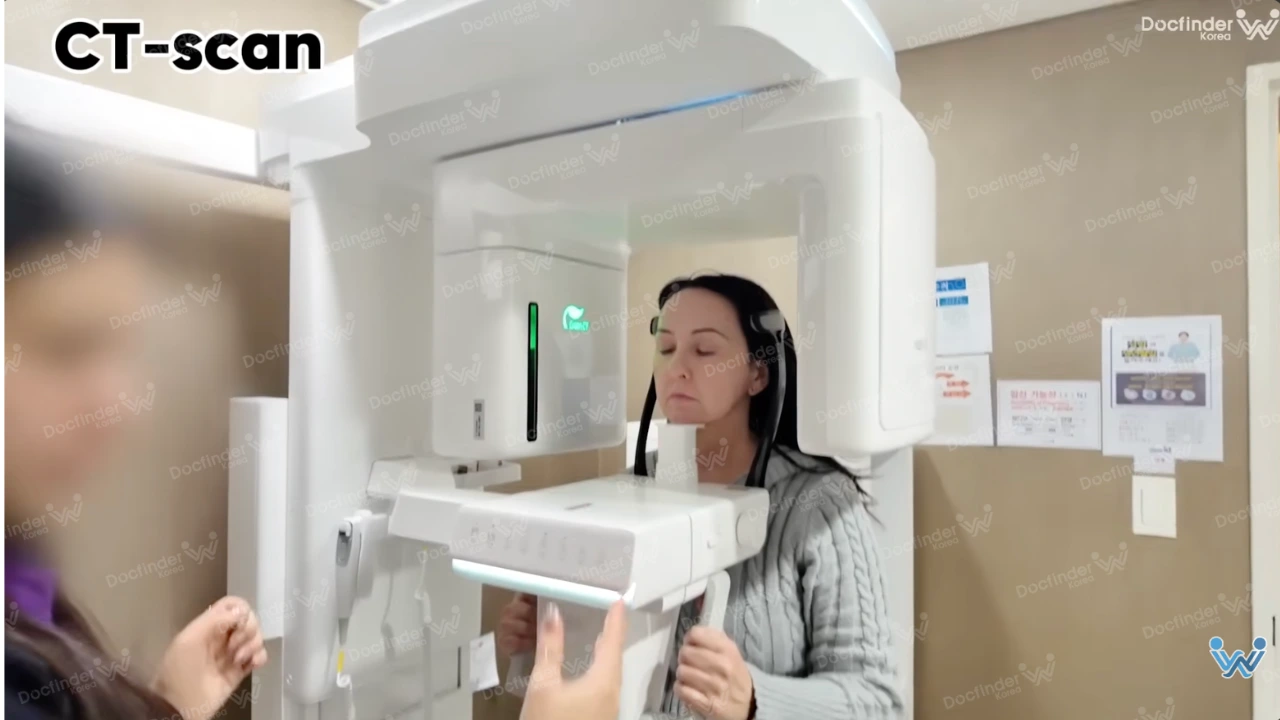
Before a single mark is drawn, most top Seoul clinics capture a 3D-CT scan and run an AI simulation of the proposed result. You see a projection of your own face from every angle, which turns a vague hope into a concrete, agreed-upon plan. It also protects you: if a requested change would look unnatural on your bone structure, the simulation shows it early, while it is still a conversation rather than a regret.
Autologous tissue and natural technique
The strongest results in 2026 lean on the patient’s own tissue. In rhinoplasty that means autologous cartilage from the septum, ear, or rib instead of relying on silicone alone, which lowers the risk of rejection and gives a softer, more lifelike tip. In facial rejuvenation it means fat grafting and regenerative therapy layered on top of surgical lifting, so skin looks healthier rather than merely tighter.
Safety you can actually verify
Reassurance in Korea is built into the process, not promised in a brochure. Docfinderkorea partners only with clinics that run operating-room CCTV, so you can request footage confirming your designated lead surgeon performed every critical step — the direct answer to the “ghost doctor” worry. Every surgery is attended by a full-time, board-certified anesthesiologist monitoring your vitals in real time, and the surgeons work at KHIDI-registered hospitals led by KSPRS board-certified specialists. You can relax and let the team do its work.
Korean Double Eyelid Surgery Before and After
No procedure fills more galleries than the eyes, which is why Korean double eyelid surgery before and after is one of the most-searched phrases in aesthetic medicine. The 2026 approach is quieter and more anatomical than the sharp, obvious creases of a decade ago.
Natural adhesion and ptosis correction
The trend is the natural-adhesion method, which uses fine sutures to bond skin and muscle into a crease that stays convincing even when the eyes are closed. Just as important is ptosis correction: many people read as tired not because they lack a fold, but because a weak levator muscle lets the lid sit low. Strengthening that muscle opens the gaze and is often the real reason a before-and-after looks so awake. Surgeons frequently add epicanthoplasty at the inner corner to lengthen the eye into a soft, almond “Seoul eye,” plus under-eye fat repositioning to erase eye bags. When you study an eye result, look at how much of the iris shows and whether the person looks rested rather than startled — that balance is the mark of good work.
Rhinoplasty in Korea Before and After
Search rhinoplasty in Korea before and after and you will see why the nose is the centerpiece of facial harmony: a few millimeters changes the whole face. Korean rhinoplasty has moved far past the one-size silicone bridge of years past.
A nose designed for your face
Using the 3D-CT plan, the surgeon calibrates bridge height and tip projection to your forehead, eyes, and chin, so the nose belongs to the face rather than sitting on it. Autologous cartilage builds a natural, durable tip, and a growing share of patients choose functional rhinoplasty — septoplasty or turbinate reduction folded into the aesthetic operation — so they breathe better as well as look better. In a strong before-and-after, the profile flows in a clean line and the tip looks soft, never pinched. Because so much facial change lives in the nose, many patients combine rhinoplasty with eye surgery in one trip, which is both efficient and, as the pricing section explains, cost-effective.
Facelift in Korea Before and After
For patients over 40, the phrase that matters is facelift in Korea before and after — and it is exactly the transformation Rowena traveled for. The “wind-tunnel” pulled look of old-fashioned facelifts is gone.
The deep-plane and hybrid lift
The 2026 standard is a deep-plane lift that repositions the SMAS layer beneath the skin, so the face is lifted at its foundation rather than stretched at the surface. Surgeons then layer in regenerative steps — fat grafting, and sometimes exosome or stem-cell therapy — to restore youthful volume and skin quality. The best facelift results are not just tight; the skin genuinely looks healthier and more radiant. Patients in their late 30s and 40s often opt for a mini-lift with incisions hidden in the hairline, buying a five-to-ten-year reset with less downtime.
Rowena’s Story: From Sydney to Seoul at 50

Rowena had spent years being misread. Friends and colleagues kept asking if she was tired, sad, or worried — and she was none of those things. As she describes it in her Docfinderkorea video, the natural aging of her face had settled into an expression that no longer matched how she felt inside. At 50, living in Sydney, she decided she was done being asked what was wrong when nothing was. She wanted her face to look the way her life actually felt: content and full of energy.
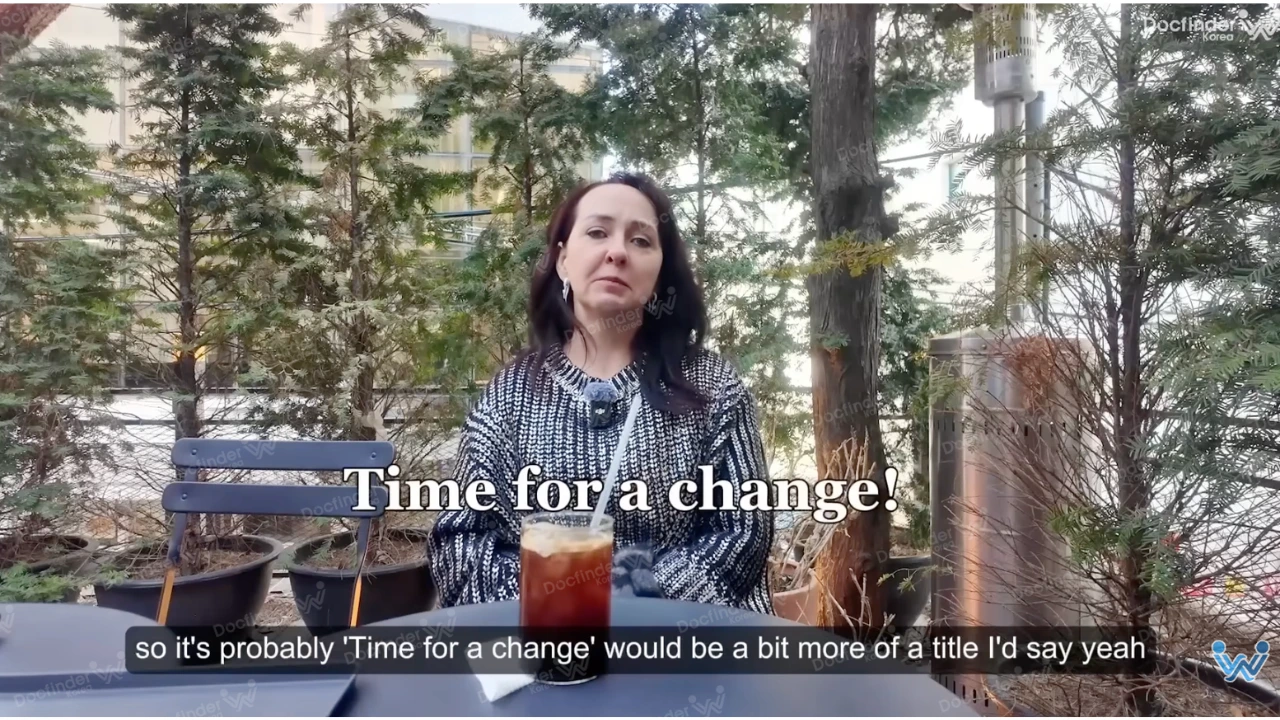
Traveling to the other side of the world for surgery is a daunting thing to do alone, and Rowena did not underestimate it. What tipped the decision was not a discount or a single clinic’s marketing but the realization that she could go with a full-care agency handling the medical coordination, the language, and the logistics from the moment she landed. That is what made Seoul feel possible rather than reckless.
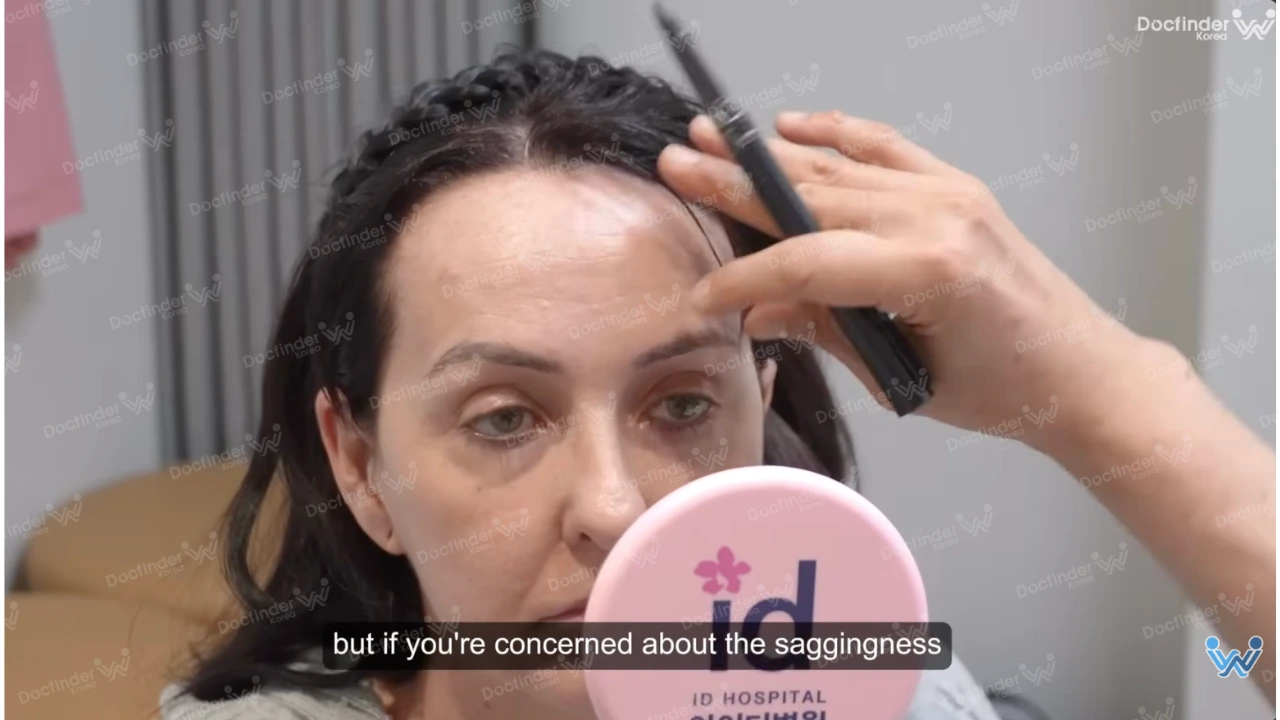
Her plan centered on a full facelift to reposition the deep tissues that had begun to sag, addressing precisely the tired, downturned look that had bothered her for so long. In Seoul she went through the same careful sequence every Docfinderkorea patient does: an in-person consultation to confirm the plan against her 3D imaging, a surgery day with her designated surgeon, and a coordinator beside her who understood both the medical vocabulary and the ordinary human anxiety of being far from home.
Rowena documented her journey across several parts, from arrival and consultation through surgery and into recovery, and the throughline is not the surgery itself — it is how supported she felt at each step. Her early results show the quiet kind of change Korea is known for: not a different woman, but the same Rowena looking rested, lifted, and like herself on a very good day. Hers is exactly the Korean plastic surgery before and after that this guide is about — a change big enough to feel life-altering and subtle enough that the story is hers to tell.
Why Rowena Chose a Full-Care Agency, Not an App
Korea has popular domestic booking apps — the Gangnam Unni and Babitalk marketplaces — but they are built for locals who can read Korean, compare deals, book, and show up on their own. For an international patient flying in from Sydney or New York, book-and-go is not enough. That gap is exactly what a full-care agency fills, and it is why Rowena chose Docfinderkorea.
Docfinderkorea is registered with Korea’s Ministry of Health and Welfare and works as the patient’s advocate rather than any single clinic’s salesperson. The model rests on three pillars: Direct Surgery Monitoring, so your designated surgeon is the one who operates; In-Person Hospital Accompaniment, so a coordinator is physically with you through consultations and appointments; and All-Inclusive Recovery Care, so healing is managed rather than left to chance. Around all of it runs a 24/7 Premium Concierge.
What’s included
- Customized clinic and surgeon matching based on your features and goals, not a house favorite.
- Professional medical translators who are also coordinators and can advocate for you in the consultation room.
- Airport pickup and transport between your accommodation and the clinic.
- Post-op concierge support — late-night questions, medication runs, and help finding recovery-friendly meals.
- Help arranging deswelling treatments and follow-up before you fly home.
The part that surprises most patients: all of this comes at no extra cost. The clinics pay the agency, so you get a dedicated advocate and the same pricing local Koreans receive, with no hidden “foreigner fees.”
How to Book Your Korean Plastic Surgery Journey: Step-by-Step
- Start with a free online consultation. Upload your photos and goals at Docfinderkorea’s quick-inquiry portal and receive a preliminary assessment from top-tier surgeons before you book a flight.
- Confirm your plan and clinic match. Your coordinator recommends the clinics best suited to your features and shares transparent pricing.
- Arrive to airport pickup. A Docfinderkorea team member meets you and handles transport into Seoul.
- Attend your in-person consultation. Meet your surgeon, review 3D imaging, and finalize the plan with your translator-coordinator present.
- Have surgery with Direct Surgery Monitoring. Your designated surgeon performs the operation under a full-time anesthesiologist, with CCTV on record.
- Recover through the first week. Your concierge supports deswelling care, medication, and daily comfort while stitches and splints stay in place.
- Clear stitch removal and fly home. After your care team removes stitches and confirms you are ready, you travel home with a follow-up plan in hand.
Korean Plastic Surgery Price 2026: Procedure Costs and Global Comparison
Pricing below is guidance for 2026 and varies with complexity, surgeon, and clinic; your consultation gives an exact quote. Figures use an exchange rate of roughly 1 USD to 1,500 KRW as of July 2026 — always confirm the day’s rate. One note that matters this year: Korea’s cosmetic-surgery VAT refund for foreigners ended on January 1, 2026, so prices are quoted straightforwardly with that change already priced in.
Typical Seoul price ranges
Double eyelid surgery generally runs from about 900 to 3,850 US dollars, or roughly 1.35 to 5.8 million won, depending on whether you choose the non-incisional method, a full incisional procedure, or a package that adds ptosis correction. Rhinoplasty ranges from about 1,850 dollars for bridge augmentation to 3,300 to 5,500 dollars for a full bridge-and-tip operation, and up toward 7,200 dollars for complex revision or rib-cartilage work — broadly 2.8 to 10.8 million won. A deep-plane facelift, the procedure at the heart of Rowena’s journey, typically falls between about 9,000 and 14,100 dollars, or roughly 13.5 to 21 million won.
How Korea compares globally
- United States: the same facelift often costs 25,000 to 50,000 dollars and rhinoplasty 8,000 to 15,000 dollars, so Korea commonly saves 40–65% for equivalent, board-certified quality.
- Thailand: competitive on some procedures, but with a smaller pool of high-volume facial-bone and revision specialists.
- Turkey and Mexico: often the cheapest headline prices, which usually means thinner aftercare and a bigger quality gamble.
- The Korean advantage is value plus depth of specialists plus all-inclusive recovery care — not simply the lowest sticker.
Remember what the Korean quote usually includes: the surgery, anesthesia, facility, and structured aftercare, frequently bundled with transfers. Budget separately for flights and accommodation, and factor in the 7–14 days you’ll want on the ground.
Recovery Timeline: Week by Week
A realistic recovery timeline is part of every honest before-and-after. Here is how a facial procedure such as Rowena’s facelift, or a combined nose-and-eye trip, typically unfolds with concierge support alongside you.
- Days 1–3, the peak: swelling and tightness are highest. Your concierge arranges deswelling care, cold therapy, and rest, and checks in daily so nothing feels uncertain.
- Days 5–7, the reveal begins: stitches and any nasal splint come out. Bruising lingers, but the new contours are already visible and the shape starts to settle.
- Day 14, the transition: about 60–70% of swelling has resolved and most patients are cleared to fly home, features defined enough to see where the result is heading.
- Weeks 3–6: you look yourself in everyday life; residual swelling keeps softening week by week.
- Months 3–12: the final refinement arrives as deep tissues settle — the point at which a facelift or rhinoplasty looks its best.
Throughout, All-Inclusive Recovery Care means the logistics of healing — appointments, treatments, medication, meals — are handled for you, so your only job is to rest and let the result emerge.
The Seoul Recovery Lifestyle
Recovering in Seoul is unexpectedly pleasant, and that matters, because stress slows healing. Patients sip pumpkin juice, or hobak-jeup, a local staple believed to help reduce swelling, and everything they need sits within a short walk in Gangnam — pharmacies, deswelling and skin clinics, gentle cafes, and quiet places to stroll once they feel up to it. With a Docfinderkorea concierge managing the logistics, you spend the week doing the one thing that actually speeds a good before-and-after: resting comfortably while your body does its work.
FAQ: Korean Plastic Surgery Before and After
Will I look like a completely different person?
No — and that is the goal. The 2026 Korean philosophy prioritizes harmony, so a good before-and-after looks like a rested, balanced version of you rather than someone new.
How much can I really save versus the United States?
For most facial procedures, roughly 40–65%, with aftercare bundled in. A facelift that runs 25,000 to 50,000 dollars in the US commonly falls between about 9,000 and 14,100 dollars in Seoul.
How do I choose the right technique?
You don’t have to alone. Your surgeon uses 3D imaging to recommend the method that suits your anatomy, and your Docfinderkorea coordinator makes sure you understand the options before you decide.
How long should I stay in Korea?
Plan on 7–14 days for facial procedures, enough time for your care team to remove stitches, manage early swelling, and clear you to fly.
Are the results permanent?
Rhinoplasty and facial-contouring results are lasting. A facelift resets the clock by roughly ten years but does not stop aging; results are long-lasting rather than literally permanent.
Is a facelift worth traveling for at 50?
Rowena’s journey suggests yes, when it is planned properly. A deep-plane lift addresses the tired, downturned look that creams and lasers cannot reach.
Will there be visible scarring?
Surgeons place incisions in natural creases and the hairline, and eye and nose scars are hidden in folds or inside the nostril. With proper aftercare, scars typically fade to near-invisible.
Is it safe to travel solo for surgery?
With a full-care agency, yes. Rowena flew alone from Sydney and was accompanied throughout by Docfinderkorea — from airport pickup to in-person hospital accompaniment to 24/7 concierge support.
Your Next Step
Your before-and-after starts with a conversation, not a plane ticket. Book a free online consultation with Docfinderkorea and share your photos and goals to receive a preliminary assessment from Korea’s top-tier surgeons: docfinderkorea.com/quick-inquiry.
As a government-certified, Ministry of Health and Welfare-registered full-care agency, Docfinderkorea gives you Direct Surgery Monitoring, In-Person Hospital Accompaniment, All-Inclusive Recovery Care, and a 24/7 Premium Concierge — all at no extra cost, because the clinics pay the agency. Like Rowena, you can focus entirely on your result while the logistics are handled for you.
Related Articles
Cost Comparison: Plastic Surgery in Korea vs. Other Countries
Rhinoplasty in Korea | Complete Seoul Nose Surgery Guide
Under Eye Blepharoplasty in Korea 2026: The Ultimate Guide
Back