





Journal
The Ultimate 2026 Guide to Septal Deviation Surgery Cost: Breathing Luxury in Seoul
2026-03-11
Nose
The Ultimate 2026 Guide to Septal Deviation Surgery Cost: Breathing Luxury in Seoul
Summary
- Medical: The septal deviation surgery cost in Korea runs roughly 55–75% below United States pricing, so a functional septoplasty that solves years of blocked breathing becomes genuinely affordable at a KSPRS board-certified Seoul hospital.
- Technology: 3D-CT airway mapping and endoscopic septal correction let surgeons straighten the septum with millimeter precision, which is why the Septorhinoplasty Korea price 2026 buys both a clear airway and a balanced profile in one operation.
- Care: Docfinderkorea's Full-Care Agency model — Direct Surgery Monitoring, In-Person Hospital Accompaniment, All-Inclusive Recovery Care and a 24/7 Premium Concierge — guided Ricardo through his entire deviated-septum journey at NANA Plastic Surgery, at no extra cost to him.
Quick Facts: Septal Deviation Surgery in Korea (2026)
- Surgery duration: about 1 to 2 hours for a standalone septoplasty; 2 to 3 hours when combined with functional rhinoplasty.
- Anesthesia: local with sedation for isolated septoplasty, or general anesthesia with a full-time board-certified anesthesiologist for combined cases.
- Method: endoscopic, largely closed (inside-the-nostril) correction of the deviated bone and cartilage, often with turbinate reduction to widen the airway.
- Splints and packing: internal silicone splints for roughly 5 to 7 days; dissolvable or removable packing rather than the painful old-style gauze.
- Deviated septum surgery recovery time: back to light daily life in about a week, cleared to fly home around day 7 to 10.
- Recommended stay in Korea: 7 to 10 days for a smooth first-week check and splint removal before departure.
- Typical price range: about USD 2,500 to 4,500 for functional septoplasty, USD 5,000 to 9,000 for combined septorhinoplasty.
- Foreign-patient perks: VAT refund on medical services and full English-translated documentation for insurance claims back home.
Table of Contents
- Why Patients Choose Septal Deviation Surgery in Korea
- Septal Deviation Surgery in Korea: The Medical Edge in 2026
- Functional Rhinoplasty Korea: Fixing the Breath and the Shape at Once
- Ricardo's Story: Years of Blocked Breathing, One Trip to Seoul
- Why Ricardo Chose a Full-Care Agency, Not an App
- How to Book Septal Deviation Surgery in Korea: Step-by-Step
- Septal Deviation Surgery Cost in Korea 2026: Price and Global Comparison
- Deviated Septum Surgery Recovery Time: Week by Week
- The Seoul Recovery Lifestyle
- FAQ: Septal Deviation Surgery in Korea
- Your Next Step
- Related Articles
Why Patients Choose Septal Deviation Surgery in Korea
If you have spent years feeling like you breathe through a permanently half-closed door, you already know the quiet toll it takes. Broken sleep, a nose that whistles on one side, the constant reach for a spray that never quite works, and a workout that leaves you gasping earlier than it should. Very often the cause is not allergies at all but anatomy: a deviated septum, the crooked wall of bone and cartilage between your nostrils. It is one of the most common structural problems in the human body, and one of the most rewarding to correct.
More international patients are discovering that the smartest place to fix it is Seoul. When people compare the septal deviation surgery cost across the globe, Korea keeps standing out for the same reason it dominates cosmetic surgery: an extraordinary concentration of specialist skill, transparent pricing, and hospital-grade safety, all at a price that makes Western quotes look inflated. Seoul's Gangnam district holds more accredited plastic and ENT clinics per square mile than anywhere on earth, and Korean surgeons perform a very high volume of nasal procedures, which sharpens their precision year after year.
It helps to be clear about what this surgery is and what it is not. A septoplasty is a functional operation that straightens the septum so air can move freely; it is not primarily a cosmetic nose job. If you also want to refine the outward shape of your nose, that is a separate but combinable step called functional rhinoplasty. Understanding that difference is the first move toward a realistic plan and an honest quote.
Who Is an Ideal Candidate?
- You have chronic nasal blockage on one or both sides that sprays and antihistamines do not fix.
- You snore, sleep poorly, or wake up tired despite a full night in bed.
- You struggle to breathe through your nose during exercise or in cold, dry air.
- You get repeated sinus infections or nosebleeds linked to a dry, obstructed passage.
- You are in reasonable general health and can commit to roughly 7 to 10 days in Korea.
That last profile describes Ricardo almost exactly. He is the patient at the heart of this guide — a traveler who came to Korea to fix a deviated septum that had disrupted his sleep and his training for years, and who let Docfinderkorea document the whole thing on camera. You will meet him properly in a moment.
Watch Ricardo's full journey:
Septal Deviation Surgery in Korea: The Medical Edge in 2026
What sets a Seoul septoplasty apart in 2026 is planning. Before any incision, most partner hospitals run a 3D-CT scan that maps your airway and the exact geometry of the deviation in three dimensions. The surgeon sees precisely where the septum bends, how the turbinates are crowding the passage, and how much cartilage can be safely reshaped and reused. The Korean philosophy is measure twice, cut once, and that obsessive pre-planning is a big reason revision rates stay low.
Endoscopic Septoplasty
The modern correction is done largely with a high-definition endoscope through the inside of the nostril, so there is no external scar. The surgeon straightens or trims the deviated cartilage and bone and, where needed, repositions it to hold a stable, open airway. Because the work is targeted rather than aggressive, swelling and downtime are far lower than most patients expect.
Turbinate Reduction
A deviated septum often travels with enlarged turbinates, the scroll-shaped filters lining the nasal wall. Left alone, they can keep blocking airflow even after the septum is straight. Korean surgeons routinely add a conservative turbinate reduction in the same sitting to genuinely maximize breathing, rather than sending you home only half-fixed.
Structural, Tissue-First Nasal Work
Where patients also want the outer shape addressed, top Seoul surgeons favor a structural approach using your own tissue — septal, ear, or rib cartilage — instead of simply dropping in an implant and hoping. That produces a nose that is both stronger and more natural, and it is the same tissue-first standard that makes Korean before-and-after results look so refined.
Safety You Can Actually See
Reassurance in Korea is built into the building. Accredited partner hospitals run operating-room CCTV so there are no ghost doctors — the surgeon you consulted is the surgeon who operates. Combined cases use a full-time, board-certified anesthesiologist rather than a shared one. The hospitals are KHIDI-registered for international patients and staffed by KSPRS board-certified specialists, and Docfinderkorea itself is registered with Korea's Ministry of Health and Welfare. None of this is a warning list; it is simply the floor you stand on in Seoul.
Functional Rhinoplasty Korea: Fixing the Breath and the Shape at Once
For many international patients the real appeal of coming to Seoul is the two-in-one. Functional rhinoplasty Korea, sometimes called septorhinoplasty, treats the internal deviation and refines the external shape in a single operation, under a single anesthesia, by a single expert hand. Rather than paying for two surgeries and two recoveries, you consolidate everything into one trip.
This is exactly the 2026 shift Korean clinics have leaned into: patients no longer want a nose that merely looks different, they want one that breathes better and looks balanced. Because the surgeon is already inside the nose correcting the septum, refining the tip or bridge in the same procedure adds efficiency rather than risk. It also means the structural work supporting your new shape is done by the person who understands your airway best, which protects the long-term result. When you weigh the Septorhinoplasty Korea price 2026 against the cost of separate cosmetic and functional surgeries in the West, the value gap is enormous — often the difference between a single mid-four-figure trip and a five-figure bill at home.
Ricardo's Story: Years of Blocked Breathing, One Trip to Seoul
Ricardo did not travel to Korea chasing a new face. According to Docfinderkorea's published account of his journey, he came to solve a problem that had shadowed his daily life for years — a deviated septum that made breathing during sleep and exercise genuinely difficult. His main goal was better breathing and everyday comfort. He also hoped, if it could be done well, to refine the appearance of his nose into something more balanced and natural. In other words, a textbook functional rhinoplasty candidate.
He had his surgery at NANA Plastic Surgery Hospital in Seoul, and he let the cameras follow the parts most patients never get to see beforehand: the honest early recovery days, the congestion, and then the moment the internal splints and external cast came off. Docfinderkorea's recovery film documents that Day 7 reveal — the first time many septoplasty patients say they truly breathe — and keeps going all the way to a two-month update so viewers can see how swelling settles and the final shape emerges.
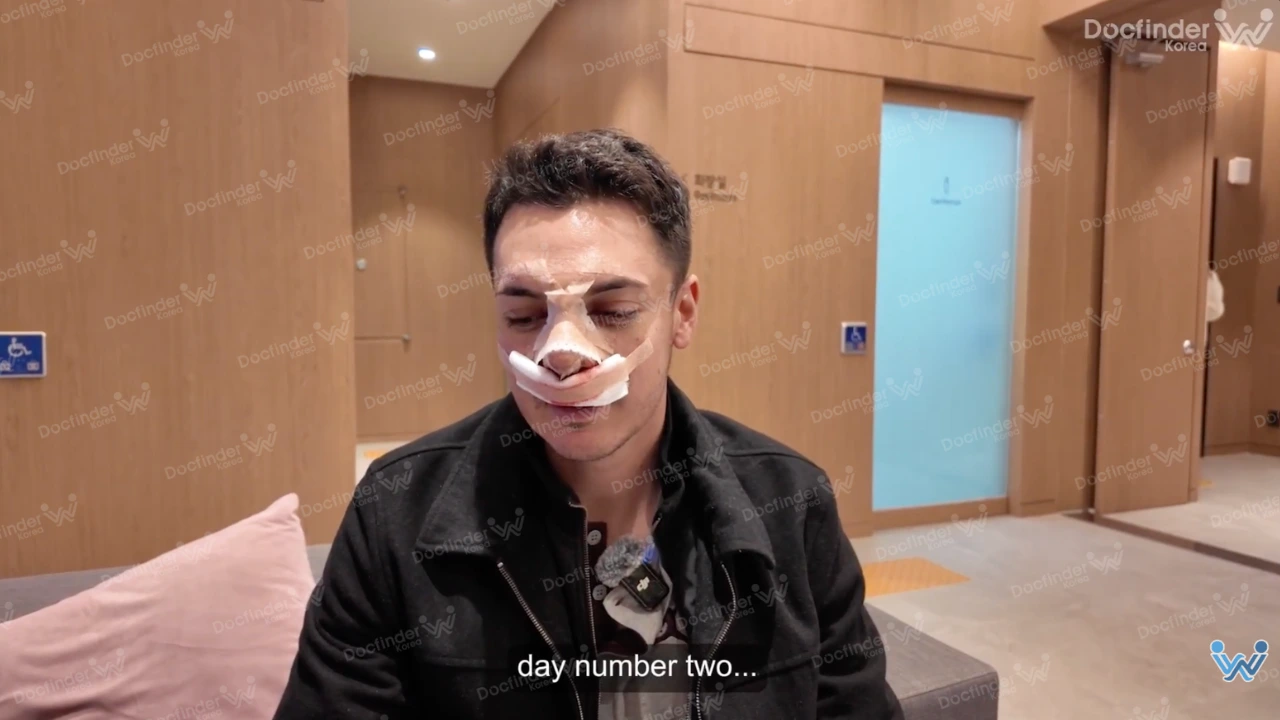
The two-part series is candid on purpose. Part one covers the decision and the surgery for his deviated septum and breathing problems; the recovery film then walks through the swelling, the healing, and the emotional Day 7 unveiling. One viewer summed up why that honesty matters, commenting on the recovery video: "This looks fantastic! Thanks for giving these details and including the 2 month updates — so helpful and informative." (Comment quoted from Docfinderkorea's official YouTube channel; Ricardo's own words here are drawn from Docfinderkorea's published video account rather than an on-camera transcript.)
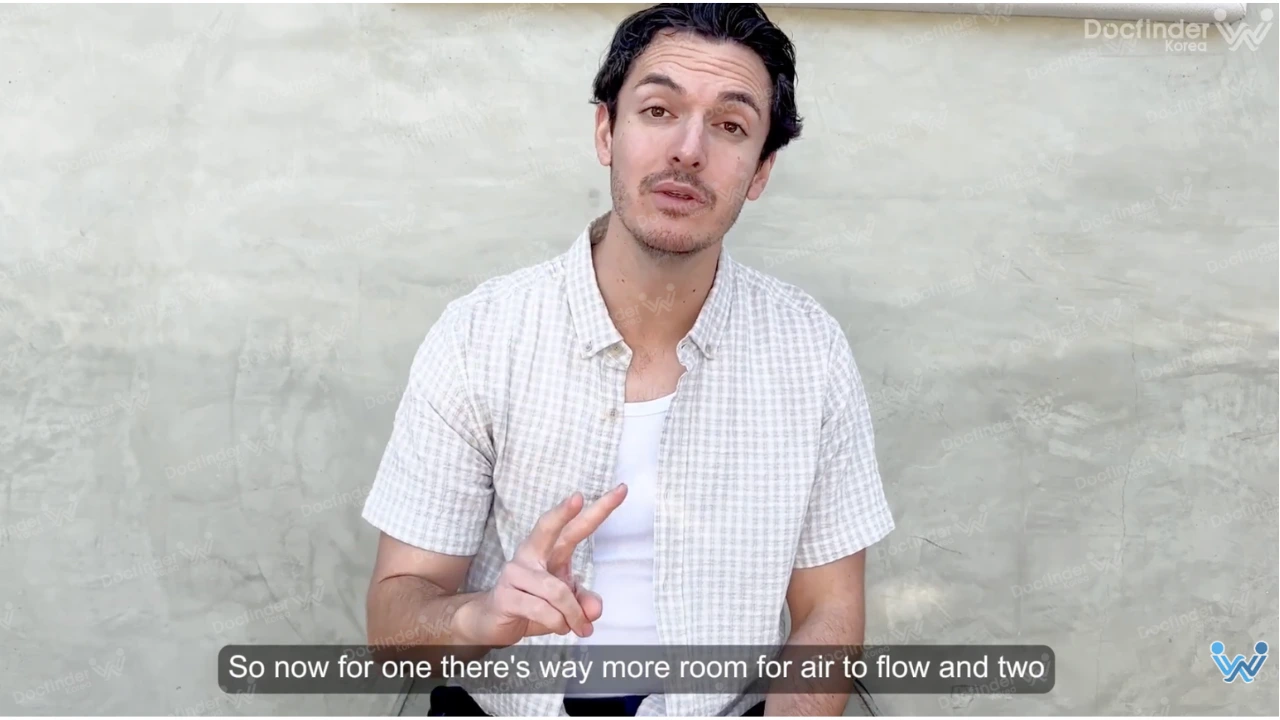
What Ricardo's journey shows better than any price chart is the arc of the experience: a specific, long-standing breathing complaint, a precise surgical plan, a fully supported week in Seoul, and a nose that both works and looks the part. His story runs through the rest of this guide, because it is the clearest way to understand what your own trip could feel like.

Why Ricardo Chose a Full-Care Agency, Not an App
It is tempting to think a booking app can handle a medical trip. Domestic Korean marketplaces such as Gangnam Unni and Babitalk are built mostly for local residents on a book-and-go basis: you pick a clinic, you show up, and everything in between is on you. For someone flying in from abroad, jet-lagged and about to have surgery, that gap is where trips go wrong. Ricardo chose a Full-Care Agency precisely so there was no gap.
Docfinderkorea's model rests on three pillars. Direct Surgery Monitoring means a coordinator confirms your plan and stays engaged on the day of surgery. In-Person Hospital Accompaniment means someone is physically beside you at every appointment, translating and advocating, so you are never sitting in a waiting room guessing what happens next. All-Inclusive Recovery Care covers the logistics of healing — prescriptions, follow-up visits, deswelling appointments, even the small comforts. Wrapping all of it is a 24/7 Premium Concierge for the questions that arrive at 2 a.m.
What's Included
- Free online consultation and honest, surgeon-reviewed quotes before you book anything.
- Airport pickup and help settling into recovery-friendly accommodation.
- A coordinator who accompanies you to every hospital visit and interprets throughout.
- Direct monitoring around your surgery day and structured follow-up care afterward.
- English-translated receipts and medical documentation for insurance claims back home.
The part that surprises people most: this costs the patient nothing extra. Docfinderkorea is compensated by its partner hospitals, so you pay the same clinic price you would on your own, but with a Ministry of Health and Welfare-registered team acting entirely as your advocate. That is the difference between renting a service and having someone in your corner.
How to Book Septal Deviation Surgery in Korea: Step-by-Step
- Start a free online consultation at Docfinderkorea and share your symptoms, photos, and any CT scans; you receive a preliminary assessment and a transparent quote.
- Confirm your plan and travel dates, and get matched to a KSPRS board-certified surgeon at a KHIDI-registered hospital suited to your case.
- Land at Incheon and get picked up; your coordinator helps you settle into recovery-friendly lodging near the clinic.
- Attend the in-person deep-dive consultation, where 3D-CT imaging confirms the exact surgical plan for your septum.
- Have your surgery with Direct Surgery Monitoring; combined cases run under a full-time board-certified anesthesiologist.
- Rest through the first week with concierge support, then return for splint removal and your deswelling check.
- Get cleared to fly home around day 7 to 10 with translated documents, and continue remote follow-up from abroad.
Septal Deviation Surgery Cost in Korea 2026: Price and Global Comparison
Here is the number most readers came for. In 2026 a standalone functional septoplasty at a reputable Seoul hospital generally runs about USD 2,500 to 4,500, with the Seoul average sitting near USD 3,950. A combined septorhinoplasty — the internal correction plus external refinement — typically falls between USD 5,000 and 9,000 depending on complexity, surgeon seniority, and whether cartilage grafting is needed. A turbinate reduction, when added to widen the airway, is a modest extra. These are guidance ranges; your exact quote depends on your anatomy and is confirmed after the CT scan.
Exchange rate used below: 1 USD is approximately 1,490 KRW as of mid-July 2026 (verify the live rate before you budget, as it moves daily).
In plain numbers, using a rate of roughly 1,490 KRW to the dollar (verify the live rate before you budget, as it moves daily): a functional septoplasty that addresses breathing only runs about USD 2,500 to 4,500, which is around 3.7 to 6.7 million KRW. A combined septorhinoplasty that fixes the breath and refines the shape typically falls between USD 5,000 and 9,000, or roughly 7.5 to 13.4 million KRW. When a turbinate reduction is added to widen the airway further, it adds about USD 800 to 1,500, close to 1.2 to 2.2 million KRW.
Now the comparison that makes the trip make sense. In the United States a standalone septoplasty averages around USD 11,000 and can climb to 15,000 once anesthesia, facility fees, and follow-ups are stacked on; international patients typically save on the order of 60 to 75% by choosing Korea. Thailand can undercut Korea on the sticker price but rarely matches its specialist density or aftercare depth. The cheapest tiers in destinations like Turkey or Mexico look tempting on paper, but the savings often come with thinner screening and less follow-up — a cheap-but-risky trade-off that can cost far more if a revision is needed.
What the Korean Price Includes
A Seoul quote is refreshingly complete: the surgeon's fee, the facility, standard anesthesia, and routine follow-up care are generally bundled rather than itemized into surprises. On top of that, international medical patients in Korea can claim a VAT refund on medical services, and Docfinderkorea provides the English-translated receipts many home insurers will accept toward the functional portion of the surgery. Budget separately for flights, roughly a week of accommodation, about USD 100 to 200 in post-op medications, and food and transport — all of which stay reasonable in a city that remains one of the world's more affordable luxury capitals.
Deviated Septum Surgery Recovery Time: Week by Week
The 2026 recovery protocol in Seoul is efficient by design, and Ricardo's documented journey tracks it closely.
Days 1 to 3
Expect congestion that feels like a heavy head cold, with internal splints holding the septum in its new, straight position. Discomfort is usually mild and managed well with medication. Your concierge handles pharmacy runs and check-ins so you can simply rest.
Day 7: The Reveal
This is the milestone Ricardo's recovery film centers on. Around day 7 the internal splints and any external cast come off, and many patients describe their first genuinely clear breath in years. Residual swelling remains, but the change in airflow is immediate and often emotional.
Days 7 to 10
With splints out and the first check complete, most patients are cleared to fly home. You travel back with translated documentation and a remote follow-up plan, so distance never means you are on your own.
Weeks 2 to 8 and Beyond
Breathing keeps improving as internal tissues settle, and if you had combined work the outer shape refines steadily. As Ricardo's two-month update shows, swelling continues to fade well past the first month, with the nose looking progressively more natural — a reminder that the final result is a process, not a single day.
The Seoul Recovery Lifestyle
Recovering in Seoul is quietly one of the best parts of the trip. Korean recovery culture leans on gentle, anti-inflammatory habits — sipping pumpkin juice, or hobakjeup, to help ease swelling is practically a tradition, and it is easy to find on any corner. Gangnam's density means your pharmacy, your deswelling clinic, and a soft-food café are all within a short, flat walk of your accommodation.
You are encouraged to take gentle strolls, keep your head elevated, and avoid strenuous activity while the splints are in, but nothing about the week needs to be logistically stressful. The concierge coordinates appointments and transport so your only real job is to heal. Many patients use the quieter days to enjoy the city at an easy pace: light shopping, calm cafés, and the VAT-refunded retail therapy Seoul is famous for.
FAQ: Septal Deviation Surgery in Korea
Will septoplasty really fix my breathing, or just change how my nose looks?
A functional septoplasty targets breathing specifically by straightening the septum and, where needed, reducing the turbinates. It is not a cosmetic procedure on its own. If you also want the outer shape refined, that is added as functional rhinoplasty in the same operation.
How much does septal deviation surgery cost in Korea?
Roughly USD 2,500 to 4,500 for functional septoplasty and USD 5,000 to 9,000 for a combined septorhinoplasty in 2026, versus a US average near USD 11,000 for the standalone procedure. Your exact quote is confirmed after a CT scan.
Should I get septoplasty alone or a combined septorhinoplasty?
If your only concern is breathing, a standalone septoplasty is enough. If you also want to refine the shape, combining both in one operation saves a second anesthesia, a second recovery, and a second trip — which is why so many international patients choose it.
How long is the deviated septum surgery recovery time?
Most patients return to light daily life within about a week and are cleared to fly home around day 7 to 10, after splint removal. Breathing keeps improving over the following weeks as swelling settles.
How long should I stay in Korea?
Plan for 7 to 10 days. That covers the in-person consultation, surgery, first-week recovery, and splint removal before you travel home.
Will there be a visible scar?
Septoplasty is done inside the nostril, so there is no external scar. Even combined structural work is typically closed or uses a tiny, well-hidden columellar incision that fades.
Can I travel alone for this surgery?
Yes — that is exactly what a Full-Care Agency is for. Ricardo's journey shows how In-Person Hospital Accompaniment and a 24/7 concierge mean a solo international patient is supported at every step, from airport to final check.
Can I claim any of this on my insurance back home?
Many international plans reimburse a portion of the functional (septoplasty) part of the surgery. Docfinderkorea provides English-translated medical documentation and receipts to help you file the claim.
Your Next Step
If years of blocked breathing have quietly worn you down, the fix may be one well-planned trip away. Start with a free online consultation and let a Ministry of Health and Welfare-registered, KHIDI-partnered Full-Care Agency map out your options, your honest quote, and your timeline — with a 24/7 Premium Concierge beside you from first message to final follow-up, at no extra cost to you.
Book your free online consultation at docfinderkorea.com/quick-inquiry
Related Articles
What Are the Different Types of Rhinoplasty Procedures in Korea?
How Much is the Cost of Getting Rhinoplasty in Korea?
Rhinoplasty in Korea | Complete Seoul Nose Surgery Guide
Nose Surgery Before and After Pics: Your Ultimate 2026 Guide to the Seoul Nose
Back