






Journal
Facial Feminization in Korea 2026: Maia's Real MTF Transformation Guide
2026-06-12
Nose, Facial Contouring, Anti-aging, FFS
Facial Feminization in Korea 2026: Maia's Real MTF Transformation Guide
Summary
- Medical: Full facial feminization in Korea combines brow bone reduction (Type 2 osteotomy), rhinoplasty, and facial contouring in one 4–6 hour operation performed by KSPRS board-certified specialists — at roughly 40–60% below US prices.
- Technology: Korean clinics plan FFS with 3D-CT and X-ray bone analysis, so patients like Maia see their exact skull structure before and after — "Seeing the before and after of the X-rays just blew my mind."
- Care: A Full-Care Agency model — Direct Surgery Monitoring, In-Person Hospital Accompaniment, and All-Inclusive Recovery Care with a 24/7 Premium Concierge — covers everything from airport pickup to post-return telemedicine, at no extra cost.
Quick Facts: FFS in Korea (2026)
- Surgery duration: 4–6 hours (full FFS: forehead + nose + lower face)
- Anesthesia type: General anesthesia, administered by full-time anesthesiologists
- Stitch removal: Day 7–10 (Maia's stitches and staples came out on Day 7)
- Hospitalization: Same-day discharge after ~6 hours of monitoring, or 1 night depending on scope
- Recommended days in Korea: 10–14 days
Table of Contents
1. Why "What If Something Goes Wrong After I Fly Home?" Is the Real Question
2. Facial Feminization in Korea: The Medical Edge in 2026
3. Why Maia Chose a Full-Care Agency, Not an App
4. How to Book Facial Feminization in Korea: Step-by-Step
5. FFS Surgery Cost in Korea: 2026 Verified Pricing
6. Maia's FFS Recovery Timeline Week by Week
7. The Seoul Recovery Lifestyle
8. FAQ
The Fear Nobody Talks About: "What If Something Goes Wrong After I Fly Home?"
Every transgender woman researching facial feminization in Korea runs into the same two fears. The first is what patients call "Brow Bone Anxiety" — the worry that even after hormones, a prominent forehead and heavy brow will keep giving them away in photos and in person. The second is quieter and bigger: "What if something goes wrong after I fly home?"
Add a 14-hour flight, a language you don't speak, and recovering alone in a hotel room in a foreign city, and it's easy to see why so many people stall at the research stage for years.
Maia, an American MTF patient, had the same hesitations before her surgery in Seoul. What changed her mind was evidence: "All the research I've done pointed to Korea being the best place — like the number one place in the world for plastic surgery." Several trans friends had already made the trip, and a friend she knew online — Blake — recommended both Korea and Docfinderkorea, a Ministry of Health and Welfare registered medical tourism agency with 10+ years of experience guiding international patients. This guide follows Maia's documented journey — consultation, surgery, recovery, and her return to Korea a year later — and breaks down verified 2026 pricing, risks, and aftercare for anyone considering the same path.
Facial Feminization in Korea: The Medical Edge in 2026
Facial feminization surgery (FFS) is a set of procedures that reshape masculine facial features — forehead, nose, jaw, and chin — toward feminine proportions, a definition consistent with theCleveland Clinic's clinical overview of FFS. Peer-reviewed research, including a systematic review in Plastic and Reconstructive Surgery (Morrison et al., 2016,PubMed/NCBI), links FFS to significant improvements in quality of life and reduced gender dysphoria.

Korea's position in this field is not marketing. 2,011,822 international patients visited Korea in 2025 — the first time the country crossed two million — according to theKorean Ministry of Health and Welfare and KHIDI, with plastic surgery among the top specialties. Surgeons at government-certified hospitals such as NANA Plastic Surgery in Seoul perform facial bone surgery daily, supported by 3D-CT imaging, X-ray-based planning, full-time anesthesiologists, CCTV in operating rooms, and a strict "no ghost doctors" policy — the surgeon you meet in consultation is the surgeon who operates.

A useful way to understand FFS planning is what Korean surgeons treat as the "three zones of facial gender": the upper zone (brow bone, forehead, hairline), the mid zone (nose, cheeks), and the lower zone (jaw, chin). Gender is read mostly in the upper zone — which is why brow work, not the nose, is usually the foundation. For a deeper procedure breakdown, see Docfinderkorea's guide tofacial feminization surgery in Korea.
Brow Bone Reduction Korea: Type 1 Shaving vs Type 2 Osteotomy
Not all brow bone reduction is equal, and this is where brow bone reduction Korea searches deserve a straight answer.
- Type 1 (shaving): The surgeon burrs down the outer table of the frontal bone. Suitable only for mild bossing with thick bone over the frontal sinus. Cheaper and faster, but limited correction.
- Type 2/3 (osteotomy setback): The anterior wall of the frontal sinus is cut out, reshaped flat, and fixed back in place through a coronal incision. This is the definitive correction for prominent brow bossing.
Maia's surgeon explained it to her in exactly those terms: "We cut this bone, make it flat, and put it back again." Her plan — confirmed against her X-rays — was a Type 2 osteotomy with coronal incision, an endoscopic brow lift (releasing the ligaments that hold the brows low), rhinoplasty with radix augmentation, hump correction, slight alar reduction and tip rotation, lower face and chin liposuction, and a four-thread lift. You can read more about the technique in this guide to brow bone reduction surgery in Korea, and about complementary procedures on Docfinderkorea's facial contouring page.
Honest Risks: What Can Go Wrong
FFS is real surgery, and honest counseling matters more than glossy before-and-afters. Documented risks include: temporary or (rarely) permanent numbness of the forehead and scalp — Maia reported being "really numb up here" at Day 7, which is normal and typically resolves over months; swelling that closes the eyes for 24–48 hours; bleeding, infection, or poor scarring along the coronal incision; asymmetry requiring revision; frontal sinus complications after osteotomy; and anesthesia risks. Swelling also distorts early results — Maia's surgeon warned her the face "looks more wide now" until swelling drops. Choosing a KSPRS board certification holder at a KHIDI-registered hospital does not eliminate these risks; it makes them rare and manageable.
Why Maia Chose a Full-Care Agency, Not an App
Most patients researching facial feminization in Korea first encounter Gangnam Unni or Babitalk — Korea's big automated marketplaces. They are useful for browsing reviews, but they are built for domestic patients: you book through an app, arrive alone, and translation, transport, and aftercare are your problem.
Docfinderkorea operates on a different model — a "Full-Care Agency" that stays physically present through the entire journey:
- Direct Surgery Monitoring — a coordinator tracks your operation in real time, which also independently verifies that no shadow doctor ever substitutes for your surgeon.
- In-Person Hospital Accompaniment — a translator sits beside you in every consultation and checkup. In Maia's videos, her coordinator Chloe is there from the health check to the cast removal.
- All-Inclusive Recovery Care — transport, medications, recovery food, and check-in visits between hospital appointments.
What's included, broken down: airport pickup and all clinic transfers; medical interpretation at every appointment; surgery-day monitoring and family updates; hotel-recovery check-ins; Korean recovery foods like pumpkin juice; help with pharmacy, SIM, and daily logistics; and post-return telemedicine follow-up — all at no extra cost, because clinics, not patients, pay the agency. With a global network of 101 countries behind its 24/7 Premium Concierge, the service Maia described was simple: "Docfinderkorea provided all the pumpkin juice, every taxi, every ride. They're always communicating between us and the doctors. They did literally everything."
How to Book Facial Feminization in Korea: Step-by-Step
- Virtual consultation (4–8 weeks out). Send photos and goals through a free online consultation. Docfinderkorea matches you with government-certified hospitals and returns surgical plans and quotes.
- Airport pickup and settling in. A coordinator meets you at Incheon and takes you to your Gangnam accommodation.
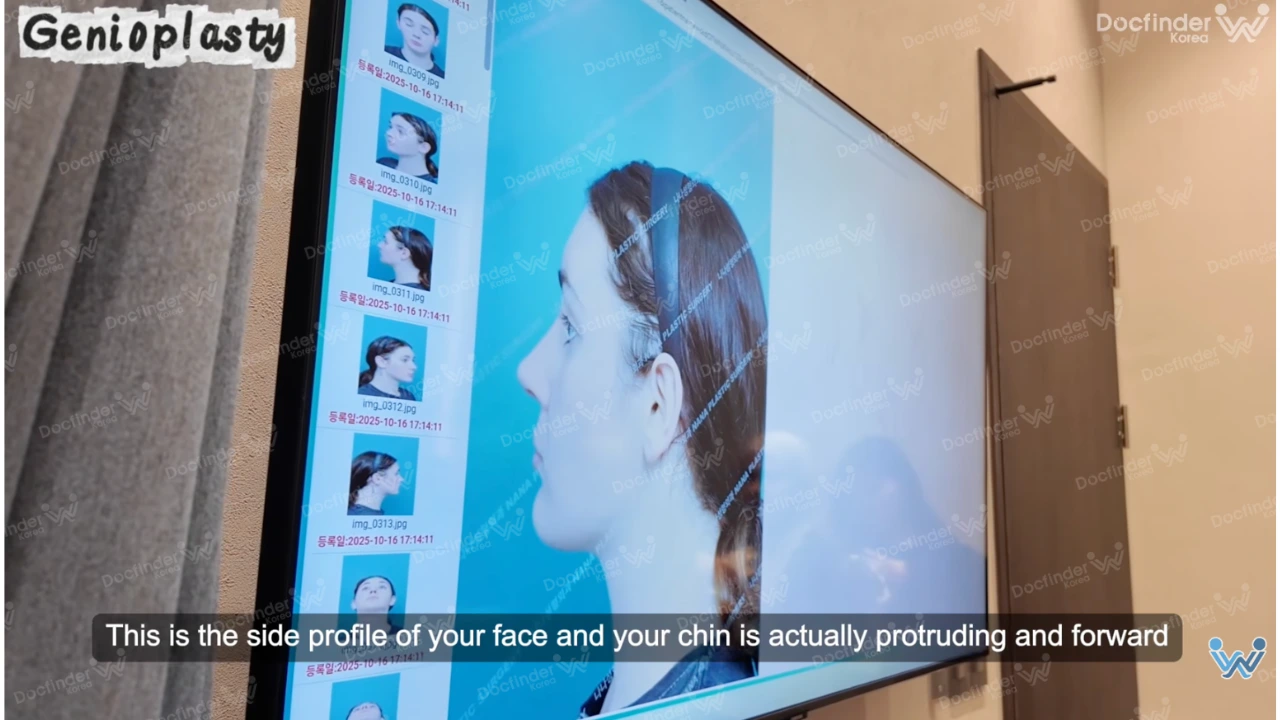
- In-person consultation, X-ray, and health check. 3D-CT/X-ray imaging confirms the bone work. Maia: "It was kind of cool to see the X-ray and see my actual bone structure. It confirmed everything I had thought."
- Surgery day with Direct Surgery Monitoring. General anesthesia, 4–6 hours, ~6 hours of monitored recovery before discharge with your coordinator.
- The "Golden Week" of recovery (Days 1–7). Ice packs, soft foods, swelling management, and scheduled checkups with interpretation.
- Cast and stitch removal (Day 7–10). Deswelling treatments and final instructions.
- Fly home + long-term follow-up. Most patients fly out around Day 10–14.
Post-return aftercare — the part nobody else covers: recovery doesn't end at Incheon. Docfinderkorea keeps a telemedicine line open after you land in the US: you send photos at Week 2, Month 1, and beyond, and questions go straight to your surgical team with translation. If a concern arises — delayed swelling, a suture issue — the team coordinates advice with your Korean surgeon and, when needed, helps you find appropriate local care. Maia's case shows the system working long-term: she returned a year later for planned refinements, with her full surgical records waiting.
FFS Surgery Cost in Korea: 2026 Verified Pricing
All figures below are text, in KRW and USD. Exchange rate as of June 2026: 1 USD ≈ ₩1,380. This is verified 2026 pricing guidance — always confirm your personal quote, since facial feminization in Korea is always a customized surgical plan.
Korea (full FFS, multiple procedures): ₩28,000,000–₩60,000,000 (≈ $20,000–$43,500). Published 2026 package ranges for Korea run $22,500–$43,500. Component pricing in Gangnam typically runs: forehead/brow bone contouring ₩6,000,000–₩8,500,000 (≈ $4,200–$6,000); feminizing rhinoplasty ₩5,500,000–₩11,000,000 (≈ $4,000–$8,000); V-line jaw and chin contouring ₩12,000,000–₩16,000,000 (≈ $8,800–$11,500).
United States: roughly $30,000–$75,000+ for comprehensive FFS; even mid-range US estimates average near $38,000–$55,000, and full multi-stage FFS can exceed $70,000. Korea typically saves 40–60% for equivalent or better technical scope.
Thailand: ≈ $11,000–$27,000. A mature destination with good hospitals, but fewer surgeons focused specifically on facial bone work, and follow-up coordination is usually on you.
Turkey: ≈ $5,500–$20,000. The cheapest option — and the classic "cheap but risky" trade-off: aggressive package marketing, variable accreditation, and minimal recourse if revision is needed. Mexico occupies a similar budget tier with the same caveats.
Travel costs: round-trip US–Seoul economy airfare typically $900–$1,600; a 12-night Gangnam hotel ₩1,700,000–₩3,500,000 (≈ $1,200–$2,500). Even with flights and lodging, total cost in Korea usually lands far below the US surgical fee alone.
Maia's FFS Recovery Timeline Week by Week
Maia (American, MTF) documented her full FFS — brow bone reduction, brow lift, rhinoplasty, facial liposuction, thread lift — on camera with Docfinderkorea.

- Day 0 (surgery day): "Today's my surgery day for my full FFS. I'm super excited. I'm a little bit nervous, but I feel really comfortable here." After ~6 hours of monitored recovery and an IV drip, she was discharged to her hotel.
- Day 1: Eyes swelled shut around midnight, six hours post-op — alarming to see, normal to experience. "I haven't really had any pain... I feel fine, I'm not in any type of pain right now." Discomfort centered on the cheeks and a slight burning at the nose.
- Day 2: First checkup; nose gauze out. Eyes reopened after about 24 hours.
- Days 3–5: Ice packs through Day 5; swelling migrated to the lower face; nose breathing returned around Day 5. Diet: soup, juices, and pumpkin juice delivered by the concierge team.
- Day 7: Cast off, stitches and staples removed at her aftercare appointment. "Everything went really smoothly... I'm way more than satisfied with everything here. It was amazing here." Her verdict on the X-rays: "Seeing the before and after of the X-rays just blew my mind."
- Weeks 2–4: Swelling steadily dropped; friends texting about her new side profile — "I love the slope and the side profile so much."
- Month 12 — the real endorsement: Maia flew back to Korea in 2026 for a second, smaller round — a mini facelift, a 3 mm chin reduction, and fat grafting to the forehead and temples. Having now had surgery in both countries, she says she prefers Korea for its more thorough preparation, honest consultations, and natural results.
The Seoul Recovery Lifestyle
Recovering from facial feminization in Korea doesn't mean two weeks staring at a hotel ceiling. Seoul is arguably the world's most comfortable city to heal in.
Korean recovery culture is real and specific: hobakjeup (pumpkin juice), believed to reduce swelling, is the standard post-surgery drink — Docfinderkorea kept Maia supplied with it. Convenience stores stock soft foods like juk (rice porridge) on every block, and pharmacies are everywhere in Gangnam, where staff are used to post-op foreigners in face wraps; nobody stares.
By the end of week one, most FFS patients are comfortable taking short walks along the Han River, browsing the Starfield Library at COEX, or doing gentle skincare shopping in Sinsa — all low-exertion, high-morale activities. Deswelling clinics offering lymphatic massage and LED therapy cluster within a few blocks of major hospitals. And because your 24/7 Premium Concierge handles taxis, appointment timing, and translation, your only job is the one that matters: healing.
FAQ: Facial Feminization in Korea
What happens at 3:00 AM if I have pain in my hotel room? You message your Docfinderkorea coordinator — the concierge line runs 24/7. The team contacts your hospital's on-call staff, translates your symptoms, and arranges an emergency visit if needed. Korean prescription painkillers are dispensed at discharge, so most nighttime issues are managed in the room. Maia's experience was typical: her worst moment (eyes swelling shut at midnight) looked dramatic but involved no real pain and needed no intervention.
Is it safe to fly home 10 days after FFS? For most patients, yes. By Day 10, casts and stitches are out and the riskiest swelling phase has passed. Surgeons recommend 10–14 days in Korea before a long-haul flight, plus in-flight precautions: hydration, walking hourly, and avoiding heavy lifting. Patients who had extensive jaw osteotomies may be advised to stay closer to 14 days. Your surgeon confirms flight clearance at your final checkup.
How much does full FFS cost in Korea in 2026? Typical full FFS packages run ₩28,000,000–₩60,000,000 (about $20,000–$43,500) depending on how many procedures are combined. That's roughly 40–60% below comparable US pricing, where comprehensive FFS commonly reaches $55,000–$75,000. Quotes through Docfinderkorea match direct hospital pricing — concierge service is included at no extra cost.
Will people be able to tell I had brow bone surgery? The goal is the opposite — a forehead that looks like it was always yours. Type 2 osteotomy hides its scar within the hairline via coronal incision. Maia worried specifically about unnatural-looking nostrils after alar reduction; her surgeon kept them round, and her own review was that the result looks "way more natural." Expect visible swelling for 2–4 weeks and subtle refinement up to a year.
Do Korean surgeons have real FFS experience with Western patients? Yes — and verifiably. Korea received 2,011,822 international patients in 2025 (Ministry of Health and Welfare/KHIDI), with Americans among the top non-Asian groups. Hospitals like NANA Plastic Surgery run dedicated international departments, and facial bone procedures that are occasional in US practices are daily routine in Gangnam. Ask for surgeon-specific FFS case counts and X-ray before/afters during your virtual consultation — legitimate clinics provide them.
What if I need a revision after I'm back in the US? First, telemedicine: photos and symptoms go to your Korean surgical team through Docfinderkorea, translated. Most concerns resolve with guidance; genuine revisions are usually planned as a return trip, often at reduced or waived surgical fees depending on the hospital's revision policy. Maia's second trip — planned refinements, not corrections — shows how straightforward returning is: her records, team, and coordinator were already in place.
Is one surgery enough, or will I need multiple stages? Korean teams typically combine forehead, nose, and lower-face work into a single 4–6 hour operation — Maia's brow bone reduction, brow lift, rhinoplasty, liposuction, and thread lift were all done at once. Staging is reserved for very extensive plans or patient preference. Some patients later add refinements, as Maia did a year on, but a single well-planned operation delivers the core transformation.
How do I avoid "ghost doctor" clinics? Choose hospitals with operating-room CCTV, KSPRS board-certified surgeons, and KHIDI/Ministry registration — and work with an agency whose coordinator monitors your surgery directly. Docfinderkorea's Direct Surgery Monitoring exists precisely so an independent party confirms your consulted surgeon performed your operation. Marketplace apps can't offer that; they end their involvement at the booking screen.
Your Next Step
If Maia's story mirrors your own research spiral — years of reading, screenshots of side profiles, the same 3 AM fears — the practical next step takes ten minutes: afree online consultation with Docfinderkorea. You'll get surgical plans, verified 2026 quotes, and honest answers from a government-certified, Ministry of Health and Welfare registered Full-Care Agency, with a 24/7 Premium Concierge behind every step. Learn more aboutwhy facial feminization surgery is popular in Korea — or just ask Maia's question and her answer:
"Was it worth it? I'm way more than satisfied with everything here. It was amazing."
Related Articles
Facial Feminization Surgery Korea 2026: Jay's Transformation Guide
Beyond the Transformation: Vlad NCL's 2026 Journey to Facial Harmony at NANA Plastic Surgery
Vlad's Recovery Journey in Korea: From Day One After Surgery to 2 Months Later
Back