





Journal
Hip Dip Surgery in Korea 2026: Yidda's Real Transformation and the Complete Curve Guide
2026-04-06
Body
Hip Dip Surgery in Korea 2026: Yidda's Real Transformation and the Complete Curve Guide
Summary
- Medical: Hip dip surgery fills the indentation between the pelvis and upper thigh so the line from waist to leg reads as one continuous curve. In Seoul it typically costs 50 to 65 percent less than in the United States.
- Technology: Korean surgeons lead the field in hip dip fat transfer, harvesting your own fat with low-trauma cannulas, purifying it through closed filtration and layering it in fine passes so more of the graft survives.
- Care: Yidda flew from Ecuador to Seoul alone for a full body contouring plan. Docfinderkorea's Full-Care Agency model gave her Direct Surgery Monitoring, In-Person Hospital Accompaniment, All-Inclusive Recovery Care and a 24/7 Premium Concierge, at no extra cost.
Quick Facts: Hip Dip Surgery in Korea (2026)
- Surgery duration: 2 to 3 hours when liposuction and hip grafting are done in one session.
- Anesthesia: sleep sedation or general, with a full-time anesthesiologist throughout.
- Method: your own fat, taken from the abdomen, flanks or thighs, purified and injected into the depression.
- Incisions: 3 to 5 millimeter entry points hidden in the bikini line and gluteal fold.
- Fat survival: roughly 60 to 80 percent of the graft stays permanently.
- Garment: compression for 4 to 6 weeks, no direct pressure on the hips for 2 to 3 weeks.
- Time to final result: 3 to 6 months, with the shape visible from week 4.
- Recommended stay in Korea: 10 to 14 days.
- Guidance price in Seoul: 3,500,000 to 7,700,000 KRW, roughly 2,500 to 5,500 USD.
Table of Contents
- Why Patients Choose Hip Dip Surgery in Korea in 2026
- Hip Dip Surgery in Korea: The Medical Edge
- Hip Dip Fat Transfer: How Korean Surgeons Build a Continuous Curve
- Yidda's Story: From Ecuador to Seoul for a Silhouette She Trusted
- Why Yidda Chose a Full-Care Agency, Not an App
- How to Book Hip Dip Surgery in Korea: Step by Step
- Hip Dip Surgery Cost in 2026: Korea Compared With the World
- Hip Dip Surgery Recovery Time: A Week by Week Timeline
- The Seoul Recovery Lifestyle
- Frequently Asked Questions About Hip Dip Surgery
- Your Next Step
- Related Articles
Why Patients Choose Hip Dip Surgery in Korea in 2026
Hip dips are the inward curves just below the hip bone, where the skin attaches firmly to the greater trochanter. They are skeletal architecture, not fitness, which is why squats and lunges rarely change them and why lean people still see the same two shadows in every photograph. Hip dip surgery addresses the cause directly, by adding volume where the bone leaves a gap.
Korea has become the destination of choice for that work. In 2025 the country received 2.01 million foreign patients, nearly double the 1.17 million recorded in 2024, with American arrivals up more than 70 percent. The hospitals Docfinderkorea works with are registered with the Ministry of Health and Welfare and KHIDI, with surgeons board certified through the Korean Society of Plastic and Reconstructive Surgeons.
What Hip Dip Surgery Is, and What It Is Not
Hip dip surgery is contouring, not weight loss. It redistributes volume: fat is taken from where you have too much of it and placed into the depression so the outline from waist to thigh becomes uninterrupted. Patients describe the result less as looking bigger and more as looking finished.
Who Is an Ideal Candidate for Hip Dip Surgery
- Visible indentations at the sides of the hips that persist regardless of training or weight.
- Enough donor fat on the abdomen, flanks, back or inner thighs to harvest.
- A stable weight, with no large fluctuations expected in the next year.
- A non-smoker, or willing to stop for several weeks either side of surgery, since nicotine reduces graft survival.
- Able to commit to 10 to 14 days in Korea and to wearing compression afterwards.
Watch Yidda's journey from Ecuador to Seoul:
Hip Dip Surgery in Korea: The Medical Edge
The reason patients fly across the world for a three-hour operation is technique. A hip dip is a shallow, wide, tethered space, and filling it well is a different problem from adding volume to a buttock. Korean surgeons treat it as a design question first and an injection question second.
Designing the Line Before Touching the Body
A Korean consultation begins with you standing, marked in front of a mirror. The surgeon traces where the outer thigh flares and how far the depression extends, then decides how much of the correction comes from filling the hip and how much from removing fat above and below it. Often the most transformative move is not a bigger graft but a few hundred millilitres of liposuction at the flank.
Harvest, Purify, Layer
Fat is harvested at low negative pressure with fine cannulas so the cells arrive intact rather than sheared, then purified by centrifugation or closed filtration. Injection happens in many thin passes across several tissue depths, because a graft laid in fine ribbons touches more blood supply than the same volume dropped in one pocket. That is why experienced Korean teams report survival in the 60 to 80 percent band.
Safety You Can Actually Verify
Every hospital in the Docfinderkorea network is KHIDI-registered and staffed by KSPRS board-certified surgeons. Operating rooms carry CCTV, so the surgeon who consulted with you is the surgeon who operates, and there are no ghost doctors. A full-time anesthesiologist monitors your vitals throughout, and your Docfinderkorea manager is inside the hospital while it happens.
Hip Dip Fat Transfer: How Korean Surgeons Build a Continuous Curve
Hip dip fat transfer is a two-part operation in a single session. Liposuction sculpts the donor areas and produces the raw material; grafting places that material into the depression in the volume and shape agreed at consultation.
How Much Volume Goes In
Most cases use 150 to 400 millilitres per side. Because a portion of every graft is reabsorbed in the first three months, surgeons overfill by a modest margin and plan around what will remain. Overfilling aggressively is a false economy: a graft packed too densely outruns its blood supply.
Why the Donor Area Matters as Much as the Hip
Hip dip fat transfer improves two zones at once. Removing fat from the flank and outer thigh sharpens the waist and makes the newly filled hip read as a curve rather than as bulk, which is why patients who arrive asking only about hip dips often leave with a plan that includes the abdomen and back.
Filler and Implants, and Why Fat Usually Wins
Hyaluronic acid filler softens a mild dip with no downtime, but the volume required is considerable and the effect fades over 12 to 18 months. Silicone implants suit patients too lean to harvest from, though they are less common in Korea and carry a longer recovery. Fat that survives the first three months has its own blood supply and behaves like the tissue around it for life, which is why hip dip fat transfer is the default recommendation.
Yidda's Story: From Ecuador to Seoul for a Silhouette She Trusted
Yidda came from Ecuador, roughly 15,000 kilometres and two full days of flying from Incheon. She had been thinking about body contouring for years and had looked seriously at having it done closer to home. What stopped her was not price. It was confidence in the outcome.
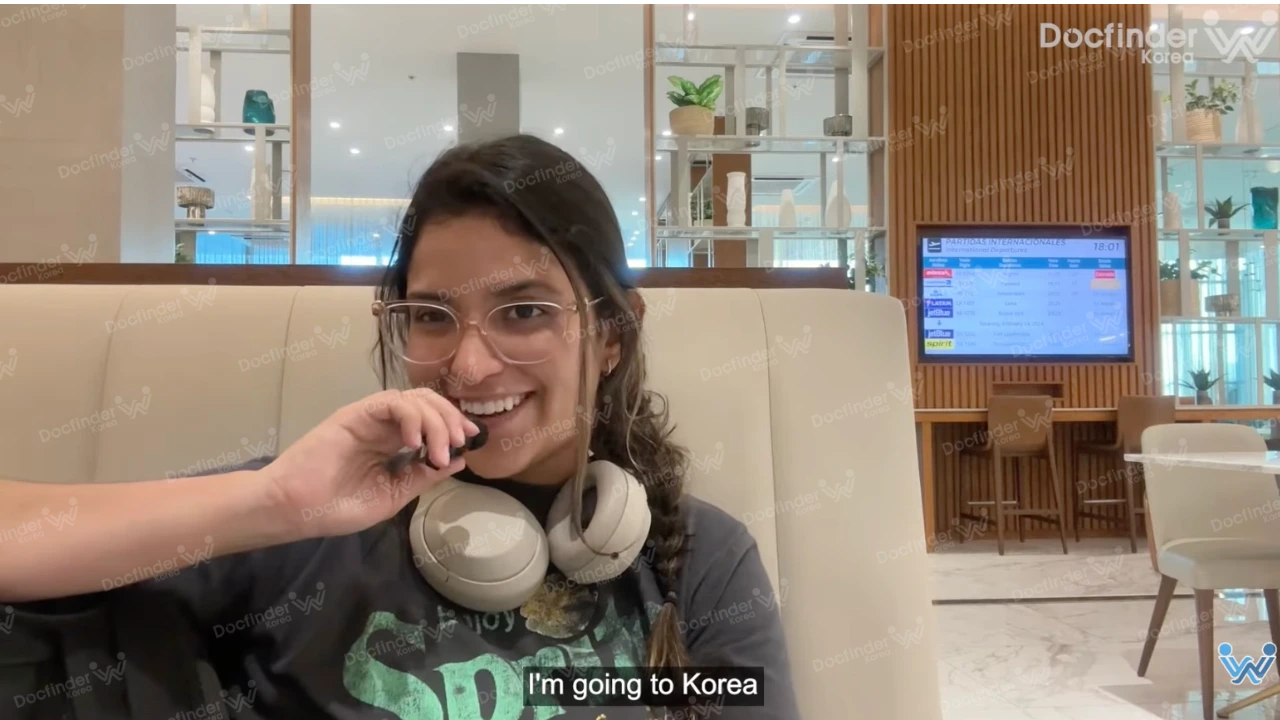
"In Ecuador, I felt there was much more risk," she said. That single sentence explains a large share of Docfinderkorea's international caseload. Patients are rarely shopping for the cheapest operation. They are looking for the place where case volume, hospital regulation and surgeon accountability combine to make a good result the expected result.
Her plan was a full body reshaping: rhinoplasty for a nose she had never liked, and liposuction across the arms, back, abdomen and thighs. That lower body work is exactly the foundation hip dip surgery is built on, because the fat removed from the abdomen and thighs is the same fat a surgeon uses to fill the hips and finish the curve.
Landing in Seoul Without a Word of Korean
Yidda speaks Spanish and English, and no Korean. She landed at Incheon after two days in transit and never had to solve a single logistical problem on her own. A Docfinderkorea manager was waiting at arrivals, took her to her accommodation, and was in the room for every consultation that followed, translating not only the words but the medical reasoning behind them.
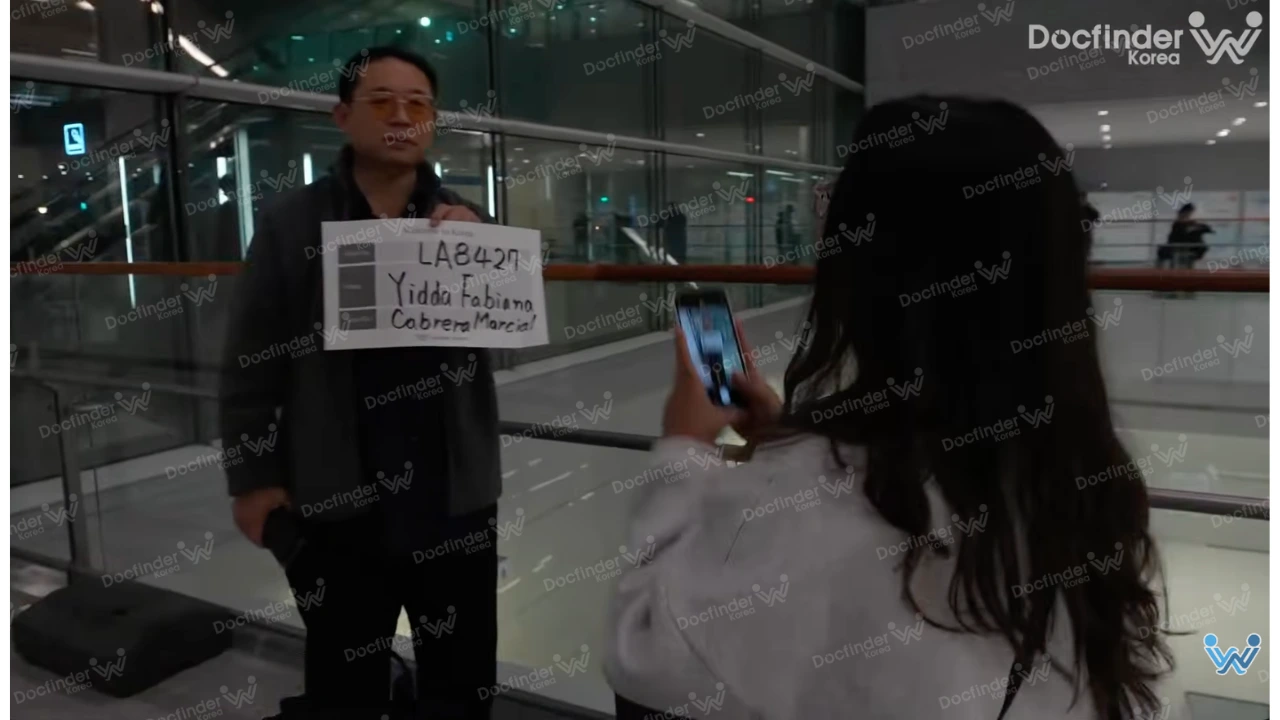
That mattered on consultation day more than she expected. Being marked up for surgery is a vulnerable moment in any language, and the questions that decide your result, how much to take, how much to add, what the line should look like from behind, are exactly the ones that get lost when communication runs through a phone app.
The Question About Massages
One exchange from her stay has since become something of a Docfinderkorea in-house story. Yidda had read everywhere that post-liposuction recovery meant weeks of painful lymphatic massage, so she asked her surgeon when hers would start.

"When I asked the doctor when the massages would start, he asked, 'Why would we do that if it hurts?'"
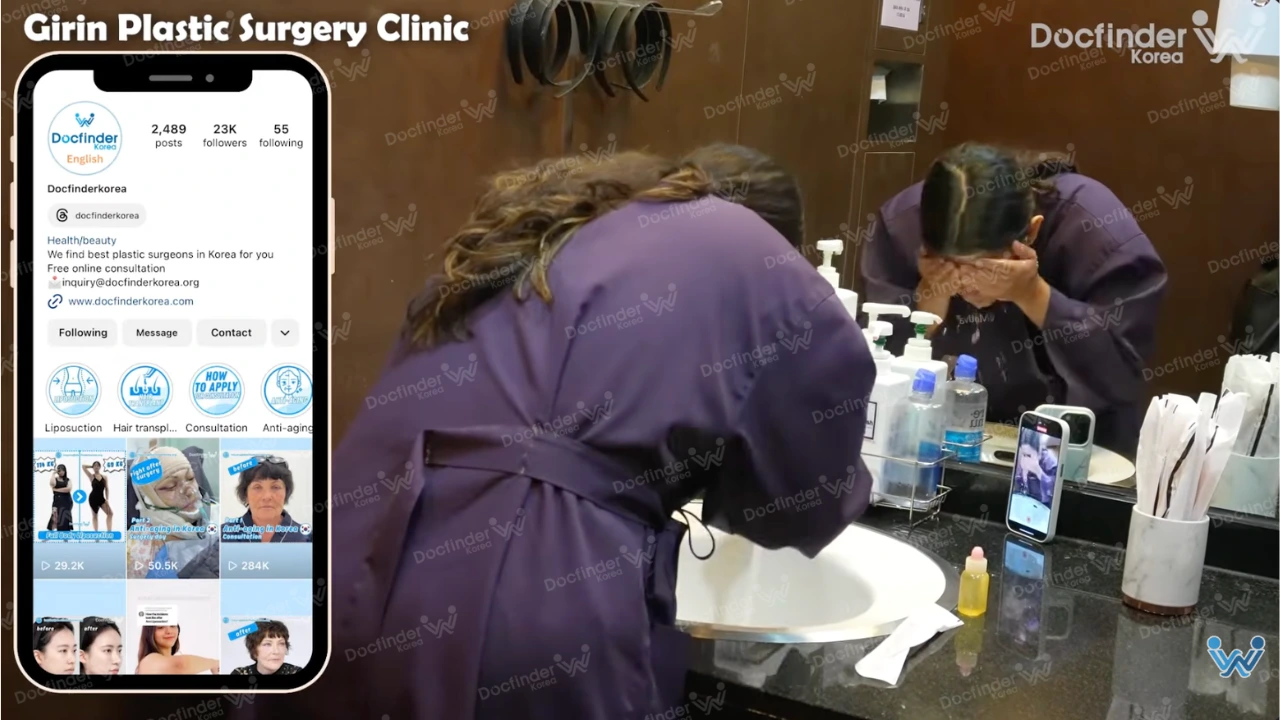
It is a small moment that captures a real difference in philosophy. Korean protocols lean on low-trauma harvesting, high-frequency ultrasound and lymphatic drainage devices, compression and early gentle walking, rather than aggressive manual work that inflames tissue the surgeon has just spent three hours protecting. For a fat graft, that restraint is not only comfort: pressure over a fresh graft is one of the fastest ways to lose it.
Three Months Later
The first three weeks were the hard part, as they are for everyone. Yidda was swollen, moving carefully, sleeping in positions she had to think about. By the second month she was back to normal clothes, and by her three-month check her jeans no longer fit at the waist, in the direction every patient hopes for.
"I'm much more confident now," she said. "The body change is a big shock, and it gets better."
Her advice to anyone considering the same trip is disarmingly simple: "Don't be afraid. Docfinderkorea will be super patient with you."
Why Yidda Chose a Full-Care Agency, Not an App
Most people researching hip dip surgery in Korea meet the domestic booking apps first. Gangnam Unni and Babitalk are built for residents who speak Korean, live in Seoul and can return to the clinic whenever something needs checking. They connect you to a clinic and their involvement ends there. If a complication appears on day nine, or a surgeon proposes changing the plan on the table, the app is not in the room.
Docfinderkorea is a Ministry of Health and Welfare registered Full-Care Agency, and the difference is presence. The model rests on three pillars.
Direct Surgery Monitoring
A Docfinderkorea manager is at the hospital while you are in surgery, confirming that the surgeon you chose is the surgeon operating. This is the safeguard against ghost doctoring, and it is not something a chat interface can provide.
In-Person Hospital Accompaniment
A coordinator attends every consultation, pre-operative test and follow-up, interpreting the clinical detail rather than the surface conversation. For Yidda, who arrived with no Korean, this was the difference between agreeing to a plan and understanding one.
All-Inclusive Recovery Care
Airport pickup, accommodation near the hospital, transport to each appointment, garment fitting, medication collection, deswelling care and a 24 hour concierge line staffed in English. "You never feel alone," Yidda said. "They are always there."
All of it comes at no additional cost. Docfinderkorea is compensated by its partner hospitals, so the price you are quoted is the price you would pay walking in alone, with an advocate added, and because the agency's relationship is with you rather than one clinic, its recommendation follows your case rather than a sales target.
How to Book Hip Dip Surgery in Korea: Step by Step
- Send photographs and a short note through the free online consultation. Front, side and back views are enough.
- Receive surgeon recommendations, an indicative price and an honest assessment of your donor fat.
- Arrive in Seoul and be met at Incheon by your manager, who takes you to accommodation near the hospital.
- Attend your consultation and pre-operative blood work with your coordinator present, and finalise the design markings.
- Have surgery, with Direct Surgery Monitoring in place and your manager at the hospital throughout.
- Spend the first week in gentle recovery with garment fitting, deswelling care and daily concierge check-ins.
- Complete stitch removal and your final review at day 10 to 14, then fly home with an aftercare plan.
Hip Dip Surgery Cost in 2026: Korea Compared With the World
Figures below use the August 2026 rate of roughly 1,408 Korean won to the US dollar and are guidance ranges, not quotations. Your final price depends on how many donor areas are treated, the volume grafted and whether the case is combined with other work.
What You Pay in Seoul
A standard hip dip fat transfer in Seoul, including the liposuction needed to harvest the fat, generally runs between 3,500,000 and 7,700,000 Korean won, roughly 2,500 to 5,500 US dollars. Cases combining abdomen, flanks and thighs with larger grafts or stem cell enriched processing reach around 9,800,000 won, close to 7,000 dollars. Filler for a mild dip is typically 1,500,000 to 3,500,000 won but needs repeating every 12 to 18 months.
What the Korean Price Includes
Korean quotations are typically all-in: surgeon's fee, anesthesiologist, operating room, blood work, your first compression garment, medication and scheduled follow-ups. Docfinderkorea's coordination, translation, accompaniment and concierge support are included at no extra charge. Budget separately for flights, around 700 to 1,500 dollars round trip from the United States, plus 10 to 14 nights of accommodation.
How That Compares Globally
In the United States the same procedure is quoted at roughly 6,000 to 12,900 dollars for surgery alone, before facility charges and follow-up, which is where the 50 to 65 percent Korean saving comes from. The United Kingdom runs about 2,000 to 8,000 pounds, Canada 10,000 to 13,500 Canadian dollars, Turkey around 4,600 dollars and Mexico 6,000 to 7,000. Korea is not the cheapest market on that list and does not try to be. It offers what the cheapest tiers cannot: very high surgical volume, government-registered hospitals, verifiable board certification and two weeks of structured aftercare in the price.
Hip Dip Surgery Recovery Time: A Week by Week Timeline
Hip dip surgery recovery time is driven by one requirement that sets it apart from ordinary liposuction: for the first few weeks the graft must not be compressed. Everything below follows from protecting it.
Days 1 to 3: The Protected Phase
You wake in a compression garment shaped to avoid the grafted zones. Expect swelling, tightness and bruising through the donor areas, managed with medication. Gentle walking starts on day one, because circulation helps the graft, while sitting directly on the hips and lying on your side are off the table. Your concierge team handles meals, pharmacy runs and transport.
Week 1: Deswelling Begins
Bruising peaks and starts to fade. Non-contact deswelling care such as high-frequency ultrasound and lymphatic drainage begins under supervision, without the aggressive manual massage many patients expect. This is the phase Yidda described as the hardest, and the one where having someone accompany you to each appointment matters most.
Weeks 2 to 4: Mobility Returns
Stitch removal and your final review happen around day 10 to 14, and most patients are cleared to fly home in this window. Compression continues, desk work and light activity resume, and the outline of the new curve appears as swelling recedes. Gym work stays off the schedule.
Months 2 to 6: The Final Shape
Cardio and lower body training resume from around week six with your surgeon's clearance. Reabsorption completes at about three months and what remains is permanent, then residual swelling resolves, the skin retracts and the contour reaches its finished state. For Yidda, this was when her jeans stopped fitting at the waist and the change stopped feeling like swelling and started feeling like her body.
The Seoul Recovery Lifestyle
Seoul is unusually good at recovery, because so much of the city is already built around it. Pumpkin juice, hobakjeup, is sold in every convenience store and is the standard Korean remedy for post-operative swelling, and deswelling clinics are as ordinary as nail salons in Gangnam.
Everything is close, too. Hospitals, accommodation, pharmacies and cafes sit within a few blocks, and your coordinator handles anything that needs Korean. Patients spend their second week doing what Yidda did: short walks, gentle sightseeing, and nothing that puts weight on the hips.
Frequently Asked Questions About Hip Dip Surgery
Will hip dip surgery make my hips look bigger overall?
Not usually. Because the same session removes fat from the flank, waist or thigh, most patients read as more contoured rather than larger. The eye interprets a continuous line from waist to leg as a narrower waist, not a wider hip.
How much does hip dip surgery cost in Korea?
Roughly 3,500,000 to 7,700,000 Korean won, about 2,500 to 5,500 US dollars, for fat transfer including the harvesting liposuction. Multi-area cases go higher, and the free online consultation returns a figure specific to your case.
Fat transfer, filler or implants: which should I choose?
If you have donor fat, hip dip fat transfer is the default: permanent, natural to the touch, and it slims the donor area at the same time. Filler suits a mild dip and no downtime, and implants are reserved for patients too lean to harvest from.
How long is hip dip surgery recovery time before I can fly?
Most patients fly home 10 to 14 days after surgery, once stitches are out and the surgeon has cleared them. Plan a two-week trip and treat an earlier departure as the exception.
Are the results permanent?
The portion of the graft that survives the first three months is permanent, though it responds to weight change like any other fat on your body. Staying within a few kilograms of your post-operative weight keeps the shape stable.
Can hip dip surgery be combined with other procedures?
Yes, and it very often is. Pairing it with abdominal or thigh liposuction is standard, since one supplies the other, and some patients add gluteal fat grafting. Combined cases usually mean a 12 to 14 day stay.
Will there be visible scars?
Entry points are 3 to 5 millimetres, placed in the bikini line and gluteal fold. They fade to marks most patients struggle to locate after several months, and laser scar care is routinely included in follow-up.
Is it safe to travel to Korea alone for surgery?
Yidda did exactly that from Ecuador, speaking no Korean and travelling without a companion. With an agency meeting you at the airport, accompanying every appointment and reachable around the clock, travelling solo is common and workable.
Your Next Step
If the two shadows at your hips have bothered you for years and no amount of training has moved them, the first step costs nothing. Send a few photographs and a note about the shape you want, and a Docfinderkorea coordinator will come back with surgeon recommendations, an indicative price and an honest answer about whether hip dip surgery will get you there.
Docfinderkorea is a Ministry of Health and Welfare registered Full-Care Agency working with KHIDI-registered hospitals and KSPRS board-certified surgeons, with 24/7 Premium Concierge support, at no cost to you.
Request your free online consultation: https://docfinderkorea.com/quick-inquiry
Related Articles
Bigger Hips Surgery in Korea 2026: Yidda's Real Transformation and the Ultimate Guide
Full Body Liposuction in Korea: 2026 Cost and Safety Guide
Mommy Makeover in Korea: The 2026 Ultimate Guide
Whole Body Liposuction in Korea: The 2026 Definitive Silhouette Guide
Back