






Journal
Natural Breast Augmentation in Korea: The 2026 Definitive Guide
2026-04-03
Body
Natural Breast Augmentation in Korea: The 2026 Definitive Guide
Summary
- Medical: Natural breast augmentation is a proportion procedure, not a size procedure. Korean surgeons plan it from your chest measurements rather than a cup-size target, which is why the result reads as a natural breast.
- Technology: Seoul hospitals pair endoscopic dual-plane placement with soft cohesive shells such as Motiva Ergonomix and JOY, plus fat transfer over the upper pole.
- Care: Tara, an Australian beauty blogger, flew to Seoul for a natural breast result alongside rhinoplasty and anti-aging work. Docfinderkorea's Full-Care Agency model gave her Direct Surgery Monitoring, In-Person Hospital Accompaniment, All-Inclusive Recovery Care and a 24/7 Premium Concierge, free of charge.
Quick Facts: Natural Breast Augmentation in Korea (2026)
- Goal: a one to one-and-a-half cup increase that keeps a natural breast slope and soft upper pole.
- Most requested volume: roughly 200cc to 350cc, matched to your base width.
- Placement: dual-plane in about three quarters of cases.
- Incision: inframammary is most common; the armpit approach is used far more often in Korea than in the West.
- Surgery duration: 60 to 90 minutes for implants, 2 to 3 hours with fat transfer added.
- Stitch check and first dressing change: day 5 to 7.
- Recommended stay in Korea: 10 to 14 days.
- Guidance price in Seoul: about 8,000,000 to 17,000,000 KRW, roughly 5,600 to 11,900 USD at the August 2026 rate of about 1,423 KRW to the dollar.
Table of Contents
- Why a Natural Breast Is the Standard Patients Ask For in 2026
- Natural Breast Augmentation in Korea: The Medical Edge
- Natural Looking Breast Implants: Size, Shape and Shell
- Natural Breast Fat Transfer and the Hybrid Approach
- Tara's Story: A Little Bit of Lifting and Shape
- Why Tara Chose a Full-Care Agency, Not an App
- How to Book Natural Breast Augmentation in Korea: Step by Step
- Natural Breast Augmentation Cost in Korea 2026: What You Actually Pay
- Natural Breast Augmentation Recovery: A Week by Week Timeline
- The Seoul Recovery Lifestyle
- Frequently Asked Questions About Natural Breast Augmentation
- Your Next Step
- Related Articles
Why a Natural Breast Is the Standard Patients Ask For in 2026
Something changed in the consultation room over the last few years. Patients used to arrive with a cup size in mind. Now they arrive with a photograph of themselves in a fitted t-shirt and say a version of the same sentence: I want it to look like this was always mine. That is the natural breast brief, and in 2026 it is the majority request.
South Korea sits at the center of that shift. Korean aesthetic surgery has always been built around restraint and undetectability, because the domestic market punishes an obvious result and a Gangnam surgeon who produces a stiff, high-riding chest does not stay busy. That pressure produced exactly the skill set an international patient now flies in for, at a moment when softer shells and reliable fat grafting have made subtlety far easier to deliver.
What Natural Breast Augmentation Is, and What It Is Not
Natural breast augmentation adds volume while preserving the anatomy that makes a breast read as real: a gently sloping upper pole, most of the fullness in the lower half, soft movement, and no visible implant border. It is planned from base width, skin stretch and tissue thickness. What it is not is a lift, because if the nipple has dropped below the inframammary fold, volume alone will not raise it and a mastopexy component enters the conversation.
Who Is a Good Candidate for a Natural Breast Result
- You want a modest one to one-and-a-half cup increase, not a dramatic change.
- Your tissue and skin envelope are reasonably firm, with the nipple at or above the fold.
- You lost volume after pregnancy, breastfeeding or weight loss and want the shape restored, or you have mild asymmetry you would like balanced.
Watch Tara's full journey:
Natural Breast Augmentation in Korea: The Medical Edge
Korean breast surgeons work on frames that are, on average, slimmer and thinner-skinned than the textbooks assumed, so they have spent thirty years solving the hardest version of the natural breast problem: how to add volume when there is less native tissue to camouflage it. Surgeons are board certified through the Korean Society of Plastic and Reconstructive Surgeons, hospitals treating international patients register with KHIDI, reputable Gangnam operating rooms now run CCTV so the surgeon you consulted is the surgeon who operates, and a full-time anesthesiologist is standard.
Dual-Plane Placement, and Why It Reads as Natural
The dual-plane technique is the workhorse behind almost every convincing natural breast in Seoul. The upper portion of the implant sits beneath the pectoralis major, so the muscle drapes over the top edge and softens the slope where an implant would otherwise create a visible shelf. The lower portion sits behind the gland, letting the lower pole expand and move the way real tissue moves. The result looks convincing standing up and, just as importantly, lying down.
Endoscopic Precision and the No-Touch Principle
Korean hospitals adopted 4K endoscopic visualization early. Creating the pocket under direct high-definition view means the surgeon releases exactly the muscle fibers that need releasing and places the device symmetrically rather than by feel, so there is less bruising and a shorter path to the final shape. The no-touch protocol runs alongside it: a funnel delivers the implant so it never contacts skin, and the pocket is irrigated with antibiotic solution. Keeping contamination of the shell near zero is the most useful thing a surgeon can do to reduce capsular contracture, the complication most likely to turn a soft natural breast firm years later.
Natural Looking Breast Implants: Size, Shape and Shell
Most of the natural breast outcome is decided before a single incision is made, by three variables: volume, shape and shell softness.
Volume: Why 200cc to 350cc Is the Natural Range
Patients asking for natural looking breast implants in 2026 overwhelmingly land between 200cc and 350cc, and the reason is arithmetic rather than fashion. An implant wider than your natural breast base has nowhere to hide, so it pushes toward the armpit and creates the tell-tale gap and bulge. Korean surgeons size from base width first: if your base measures 12 centimeters, the device that disappears is built for 12 centimeters.
Shape: Round Versus Teardrop for a Natural Breast
Teardrop implants mimic a natural breast profile at rest, which suits patients with very little native tissue, but they are firmer by necessity and rotation is a real if uncommon concern. Modern round implants in a low or moderate profile behave differently: standing up, gravity pulls the soft cohesive gel into a teardrop distribution anyway, and lying down they flatten as real tissue does. For most natural breast cases in Seoul, a soft round low-profile device outperforms an anatomical one.
Shell: The Soft Cohesive Generation
Motiva Ergonomix and the newer Ergonomix 2 and JOY generation use an ultra-soft shell with a highly cohesive gel that stretches in every direction and changes shape with your position. Mentor MemoryGel Xtra offers a higher fill ratio that reduces rippling in thin patients, Sebbin brings a multi-layer French shell at mid-range, and Korean-made BellaGel remains the value option. Softer shells widen the margin for error.
Natural Breast Fat Transfer and the Hybrid Approach
Not every natural breast in Seoul involves an implant. Natural breast fat transfer takes fat from the abdomen, flanks or thighs through fine-cannula liposuction, purifies it, and injects it in hundreds of microdroplets so each parcel sits close enough to a blood supply to survive.
What Fat Transfer Can and Cannot Deliver
The material is your own tissue, so it feels exactly like breast because it is breast. There is no device and no replacement surgery in fifteen years, and the donor area gets contoured at the same time. The limit is volume: a session delivers a half to one cup increase, and sixty to eighty percent of the fat survives long term, so the shape at three months is the shape you keep.
Hybrid Augmentation: The Best-of-Both Option
The hybrid approach has quietly become the premium choice for the natural brief. A modest implant supplies the volume and projection, then transferred fat is layered over the upper pole and along the cleavage edge to blur the implant border. For a thin patient this solves the two problems an implant alone cannot: visible edges and palpable rippling. It adds cost and an hour of operating time, but it produces the result most patients describe when they say they want it to look like it was always theirs.
Tara's Story: A Little Bit of Lifting and Shape
Tara is a beauty blogger and influencer from Australia, and she had been thinking about surgery for years before she did anything about it. Her job puts her in front of a camera constantly, which is a particular kind of pressure: she knew exactly which angles she avoided, exactly which photographs she quietly deleted, and exactly how much retouching went into the ones that survived.

What she wanted was not what people assume an influencer wants. In her own words, describing the decision before she flew: I'm getting surgery not because I want huge breasts, but I just want a little bit of lifting and shape. That sentence is the natural breast brief stated more plainly than most consultation forms manage, and it is worth sitting with, because it explains why she ended up in Seoul rather than closer to home. She was not shopping for size. She was shopping for a surgeon who would not give her more than she asked for.
Why She Chose Korea
Tara researched carefully and for a long time before committing. Korea kept coming up for the same three reasons it comes up for most patients who eventually go: the density of genuinely high-volume specialists in a small area of Gangnam, a surgical culture built around subtlety rather than transformation, and the ability to combine procedures in one trip with proper medical oversight. She had more than one thing on her list. Alongside the natural breast augmentation, she wanted rhinoplasty, a full-face fat graft and a platysmaplasty to address the neck.
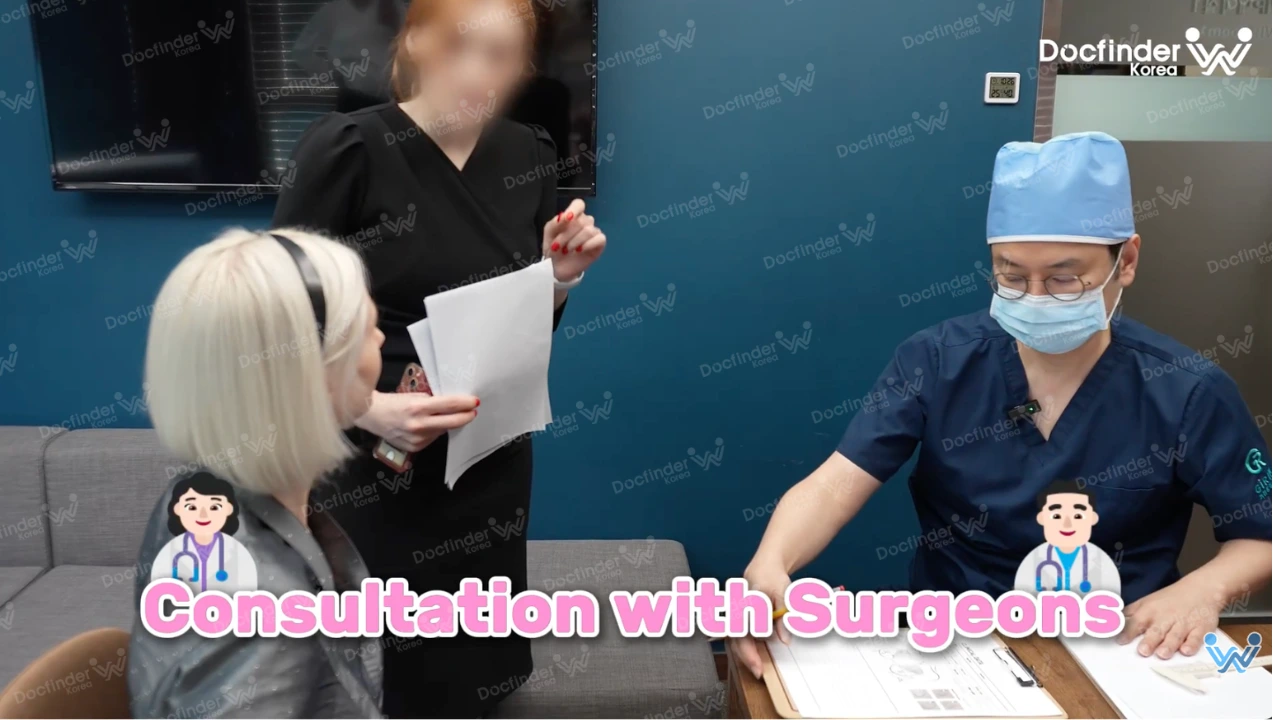
Combining that much in a single trip is exactly where medical tourism goes wrong for people who arrange it alone. It requires one team coordinating operative sequence, anesthesia time, recovery load and follow-up so that four procedures do not become four separate problems. That coordination, rather than any single surgical decision, is what Tara now credits most.
Flying to Seoul, and the Middle of the Recovery
She traveled to Korea on her own. The first days after surgery were what they honestly are for everyone: a heaviness across the chest that patients consistently describe as feeling like a hard gym session rather than a wound, restricted arm movement, disrupted sleep, and the particular flatness that arrives around day three when the adrenaline of the decision has worn off and you are a long way from home in a country where you do not speak the language.
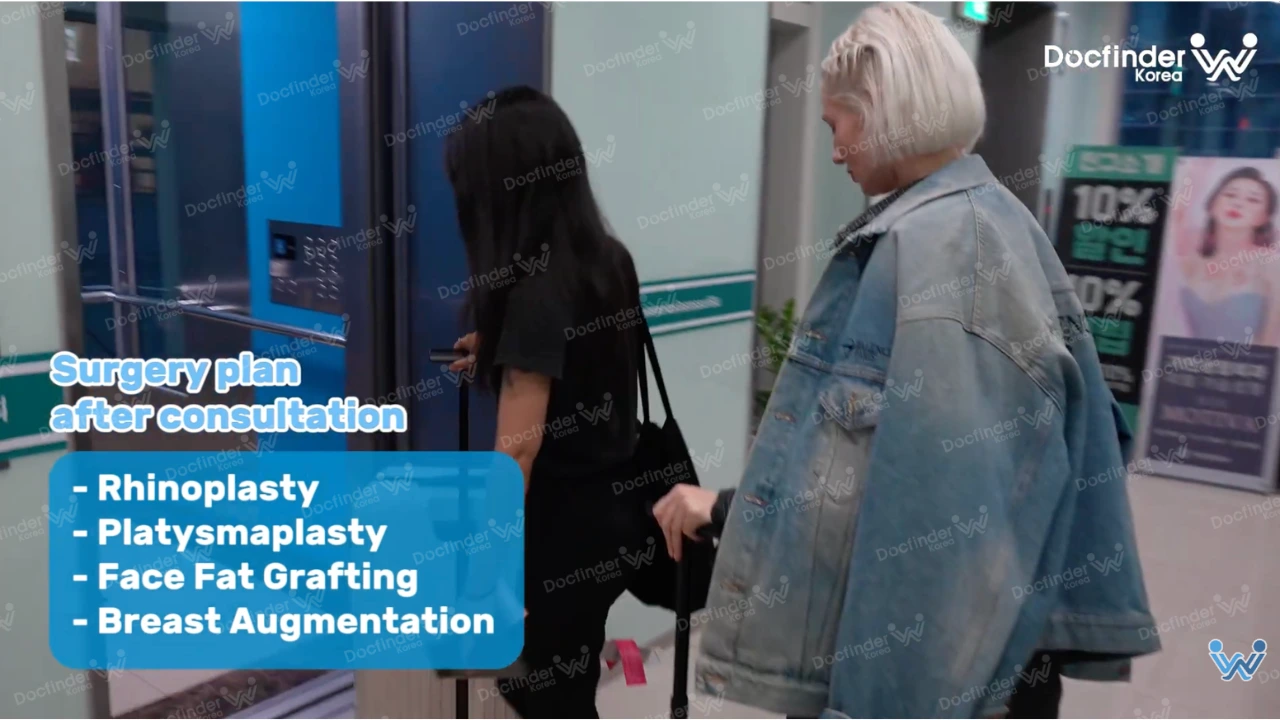
This is the part of the journey that almost never makes it into a before-and-after post, and it is the part where having someone physically present changes the experience. Her coordinator checked in daily, medications were collected and explained, taxis to and from the clinic were arranged rather than negotiated. As Tara put it: They really look after you, medications, taxis, and just checking in the whole entire time. Stitches came out around day seven to ten, and she was cleared to fly home shortly after.
No More Bad Angles
The result was what she asked for and, notably, not more than what she asked for. The change was lifting and shape rather than volume for its own sake, sitting in proportion with a frame that had not been asked to accommodate anything it could not carry. For someone whose living depends on how she photographs, the verdict came out in professional terms: I don't have to use Facetune anymore! I don't have any more bad angles.
That is a more useful measure of a natural breast result than any cup size. The test is not whether the photograph looks good. It is whether the photograph needs help. She was back to filming within weeks of landing in Australia, and her summary of the whole experience was about the process as much as the outcome: Such a wonderful experience from the minute I emailed them to enquire months ago.
Why Tara Chose a Full-Care Agency, Not an App
There is a category of platform that shows you clinic listings, collects a deposit and sends a confirmation email. It is useful for booking a hotel. It is a poor fit for a patient having four procedures under general anesthesia in a language she does not read, because the moment anything deviates from the plan there is nobody in the building.
Docfinderkorea operates on a different model, and the difference is physical presence. Direct Surgery Monitoring means a representative is at the hospital while you are in theater, confirming that the surgeon you consulted is the surgeon operating. In-Person Hospital Accompaniment means a coordinator attends your consultation, admission and follow-ups, translating not just the words but the clinical meaning behind them. All-Inclusive Recovery Care covers the scaffolding of the two weeks afterward: medications collected and explained, dressing changes and deswelling appointments booked, transport arranged. The 24/7 Premium Concierge is the line you use at two in the morning on day three, which is when most patients actually need it.
Independent, and Free to the Patient
Docfinderkorea's service is free to the patient, because partner hospitals pay the agency. That structure only works honestly if the agency is not owned by any single hospital, and Docfinderkorea is not. It is registered with the Korean Ministry of Health and Welfare, works with KHIDI-registered hospitals and KSPRS board-certified surgeons, and can recommend against a clinic without losing anything. For a natural breast case that independence matters: the surgeon who is outstanding at large-volume augmentation is not automatically the one you want for a 250cc device in a thin frame.
How to Book Natural Breast Augmentation in Korea: Step by Step
- Send a free online consultation request with clear photographs, front and both sides, plus a note describing the result you want in your own words.
- Receive surgeon recommendations, with indicative pricing and an honest read on whether implants, fat transfer or a hybrid fits what you described.
- Complete a video or written pre-consultation, where volume, placement, incision and any lift component get discussed before you buy a ticket.
- Confirm dates and plan a 10 to 14 day stay, with surgery on day two or three so you arrive rested.
- Arrive in Seoul: airport pickup, blood work, chest measurement, 3D simulation and final device selection with your surgeon.
- Surgery day, with your Docfinderkorea representative at the hospital and reachable by your family at home.
- Recover with support: daily check-ins, dressing changes around day five to seven, deswelling care, clearance before you fly, and remote review at one, three and six months.
Natural Breast Augmentation Cost in Korea 2026: What You Actually Pay
Prices below are guidance ranges for Seoul in 2026, converted at roughly 1,423 KRW to the US dollar, the rate in early August 2026. Quotes move with the exchange rate, hospital tier and the surgeon's waiting list, so treat them as a planning bracket.
Standard silicone implants from Mentor, Sebbin or Korean-made BellaGel generally run about 8,000,000 to 12,000,000 KRW, roughly 5,600 to 8,400 US dollars. Premium soft-shell devices in the Motiva Ergonomix, Ergonomix 2 and JOY generation sit at about 12,000,000 to 17,000,000 KRW, or 8,400 to 11,900 dollars. Natural breast fat transfer as a standalone procedure, including liposuction of the donor area, lands at about 9,000,000 to 13,000,000 KRW, around 6,300 to 9,100 dollars, and the hybrid approach tops the range at about 15,000,000 to 20,000,000 KRW, or 10,500 to 14,000 dollars. A proper quote covers blood work, the implant, operating room and anesthesia, garment, medications, follow-up during your stay and deswelling care, but not flights, accommodation or a later revision, so ask for the itemized list in writing before paying a deposit.
How That Compares to the United States
Recent 2026 US data puts the national average total cost of a primary breast augmentation at around 7,100 dollars, with a spread from roughly 5,100 to over 18,000 by market and New York City quotes running past 20,000. The honest comparison is not that Korea is dramatically cheaper at the entry level. The advantage sits at the premium end: a Motiva implant placed endoscopically by a surgeon doing several hundred breast cases a year, with a specialist anesthesiologist and two weeks of managed aftercare, costs in Seoul roughly what a mid-market implant costs in a major US city.
Natural Breast Augmentation Recovery: A Week by Week Timeline
Days One to Three
Expect tightness and pressure across the chest rather than sharp pain, which is why patients reach for the gym analogy. The upper pole looks high and firm and the breasts look larger than the final result. Arm movement is restricted and sleeping is propped up, and medication covers it comfortably. This is the window Tara found hardest, and it is normal for it to be.
Swelling begins to move. Dressings are changed and stitches checked around day five to seven, short walks are encouraged, and fat transfer patients also manage the donor area, often more tender than the breasts.
Most patients are cleared to fly home between day ten and fourteen after a final review. Desk work is realistic and the shape starts to look less like a post-operative chest and more like a breast, though upper-body exercise stays off the table.
Weeks Three to Six
Light cardio resumes, then gradually more. The implants begin the settling surgeons call drop and fluff, as the device descends into the lower pole and the upper slope softens, and for fat transfer patients the volume surviving at three months is the volume that stays. Softness keeps improving and scars fade toward pale, with the final natural breast shape settling between six and twelve months.
The Seoul Recovery Lifestyle
Recovering in Seoul is different from recovering at home, and most patients describe the two weeks as a strange kind of holiday. Gangnam is dense in a way that suits a patient with restricted arm movement: hospital, pharmacy, convenience store and cafes sit within a few hundred meters of each other.
Deswelling care is standard in Korean packages rather than an upsell, and it works: gentle lymphatic massage and light therapy accelerate the first two weeks, and your coordinator books the sessions and arranges transport. Beyond that, plan gentle days rather than none. Movement helps swelling resolve and helps the flat middle stretch of recovery pass, which for a patient traveling alone as Tara did is worth as much as anything clinical.
Frequently Asked Questions About Natural Breast Augmentation
Will a natural breast augmentation look natural if I am very thin?
Yes, but technique matters more. In a thin patient the two risks are visible implant edges and rippling, and both are addressed the same way: dual-plane placement, a soft cohesive shell, conservative volume sized to your base width, and ideally transferred fat over the upper pole.
Implants or fat transfer for a natural breast?
If you want a half to one cup increase, have donor fat available and want no device, natural breast fat transfer is the better fit. If you want a full one to one-and-a-half cup increase, or you are very lean, an implant does what fat cannot. If you want implant volume with fat's softness at the edges, the hybrid is the answer.
Can I still breastfeed afterward?
In the great majority of cases yes. The dual-plane approach with an inframammary or armpit incision does not disturb the milk ducts or the gland. Tell your surgeon if future pregnancy is part of your plan.
Will I lose nipple sensation?
Temporary changes in sensitivity are common in the first few months and resolve for most patients. Permanent loss is uncommon, and endoscopic nerve preservation is aimed at keeping it that way.
How long do I need to be in Korea?
Ten to fourteen days. Ten is workable for a straightforward implant case; fourteen is what to plan for if you are combining procedures as Tara did, and traveling alone is common and workable when an agency accompanies you to every appointment.
Your Next Step
If a natural breast result has been sitting on your list for years, the first step costs nothing. Send a few photographs and a note describing what you want, and a Docfinderkorea coordinator will come back with surgeon recommendations, indicative pricing and an honest answer about whether implants, fat transfer or a hybrid will get you there.
Docfinderkorea is a Ministry of Health and Welfare registered Full-Care Agency working with KHIDI-registered hospitals and KSPRS board-certified surgeons, at no cost to you.
Request your free online consultation: https://docfinderkorea.com/quick-inquiry
Related Articles
Asian Boob Job Korea 2026: Tara's Real Results and the Complete Natural Breast Augmentation Guide
The Breast Decision: Round or Teardrop Implants?
Boob Surgery in Korea: The 2026 Guide to Breast Augmentation
Korean Breast Surgery 2026: Chea Nuh's Real Transformation Guide
Back