






Journal
Comprehensive Guide to Types of Nose Jobs in Korea: 2026 Edition
2026-02-05
Nose
Comprehensive Guide to Types of Nose Jobs in Korea: 2026 Edition
- Comprehensive Care: Modern Korean rhinoplasty fuses structural ear/septal/rib cartilage engineering with advanced ENT diagnostics to safely deliver natural, customized profiles.
- The Full-Service Shield: Docfinderkorea provides an alternative to unguided apps through direct surgery monitoring, full in-person accompaniment, and 24/7 premium concierge care.
- Proven Success: California native Ricardo achieved perfect breathing and profile correction through a dual-specialist rhinoplasty, backed by Docfinderkorea's decades of medical tourism expertise.
Introduction: The Hidden Hurdles of Global Medical Tourism
When international patients envision undergoing rhinoplasty in Seoul, they often focus entirely on the transformative aesthetic before-and-after photos. However, traveling to the world’s plastic surgery capital involves crossing complex operational, linguistic, and cultural divides. For many medical tourists, severe pain points surface long before they step into an operating room.
Navigating foreign medical legalities, struggling with technical language barriers during critical surgical consultations, and experiencing deep anxiety regarding post-operative safety in an isolated hotel room are highly common challenges. Without localized advocacy, patients frequently feel vulnerable, unsure if their structural desires are accurately comprehended by their chosen surgeon.
This is precisely where the stark division between automated booking apps and an all-inclusive recovery care agency becomes vital. Open-market discount platforms like Gangnam Unni or Babitalk function as digital bulletin boards. They showcase promotional coupons and leave non-Korean speaking patients to navigate complex, fast-paced hospital networks completely alone.
Conversely, Docfinderkorea operates as a premium full-care agency officially registered with the Ministry of Health and Welfare. Backed by 10+ years of experience and a trusted global network spanning 101 countries, the organization delivers a 24/7 Premium Concierge system. By providing dedicated, in-person medical translation, structural advocacy, and comprehensive lifestyle management, international patients receive a safe, elite tier of medical care through every phase of their surgical transformation.
1. Structural Mastery: Major Types of Nose Jobs in Korea
Korean rhinoplasty focuses on structural harmony, facial proportions, and lifelong biomechanical stability. While historic Western surgical approaches often focused on reduction—shaving down large nasal structures—Korean rhinoplasty has pioneered advanced augmentation and structural refinement.
Surgeons analyze the entire facial canvas, calculating the precise S-line (the fluid transition from the forehead down the nasal bridge) and the nasolabial angle (the delicate angle connecting the nose tip to the upper lip).
In 2026, the industry has shifted entirely away from rigid, hyper-projected shapes toward customized anatomy. Below are the primary types of nose jobs performed by top-tier specialists in Seoul:
A. Low Nose Rhinoplasty (Augmentation Rhinoplasty)
Designed for individuals seeking to elevate a flat or recessed nasal bridge, this procedure adds definition to the mid-face. Elevating the bridge creates the optical illusion of bringing wide-set eyes into harmony.
Modern Korean techniques utilize a highly secure Two-Segment Approach. Rather than using an old-fashioned, single L-shaped block—which frequently caused skin thinning and tip extrusion—surgeons place a soft synthetic implant (such as ultra-pure silicone) strictly on the stable nasal bone. The dynamic tip is then sculpted exclusively with organic tissue.
B. Hump Nose Correction (Aquiline Nose Repair)
An overdeveloped nasal bone or septal cartilage can create an uneven profile hump. To address this, surgeons employ ultra-precise micro-rasping to gently smooth minor cartilage irregularities.
For prominent bone protrusions, an osteotomy is performed. This technique carefully fractures and realigns the lateral nasal bones to close the "open roof" structure, ensuring a completely straight profile without over-scooping the bridge.
C. Bulbous Nose Refinement (The Boxy Tip Solution)
Characterized by a wide, rounded tip caused by thick skin tissue or spread-out lower lateral cartilages, a bulbous nose requires complex structural slimming.
Surgeons meticulously perform subcutaneous tissue thinning, followed by a Cartilage Suture Technique that draws the natural dome cartilages closely together. A delicate shield graft is often placed on top to achieve crisp, clean definition.
D. Short or Upturned Nose Correction
Often referred to as a "pig nose," this condition reveals excessive nostril visibility from the front. It is considered one of the most challenging structural operations because the entire internal framework must be physically lengthened downward.
Surgeons anchor a robust Septal Extension Graft to push the nasal tip downward into a natural position, maintaining structural integrity over time.
E. Deviated or Crooked Nose Correction (Functional-Aesthetic Hybrid)
A twisted external nose is almost always linked to an internal deviated septum, which causes chronic airway obstruction, sleep apnea, and rhinitis.
Top clinics in Seoul address this issue using Dual-Specialist Synergy. An Otolaryngologist (ENT) first corrects internal breathing blockages, and a Plastic Surgeon immediately follows to realign the external profile, maximizing both health and beauty in a single session.
2. Advanced Bio-Materials & 3D Diagnostics
In 2026, the longevity of a nose job is determined by the materials used. Korean clinics have moved toward "Bio-compatible Harmony," selecting materials that integrate perfectly with the body's natural anatomy.
Autologous Tissues (Your Own Body)
Ear Cartilage: This material is highly ideal for structural tip contouring. Because its natural curve and flexible properties mimic the softness of a real nose tip, it provides natural movement and prevents a rigid appearance.
Septal Cartilage: This is the firm, straight cartilage harvested from inside your nasal cavity. It serves as the primary choice for internal bridge support and tip lengthening, acting as a strong structural foundation.
Rib Cartilage (Costal): As the strongest and most high-volume autologous material available, rib cartilage has become increasingly popular in 2026. It is favored for patients seeking significant structural height or those undergoing complex revision rhinoplasty where previous surgeries have depleted septal and ear cartilage.
Synthetic Implants
High-Grade Soft Silicone: This remains the most trusted and frequently utilized material for augmenting a flat nasal bridge bone. Modern silicone blocks are significantly softer and more flexible than past iterations, allowing them to sit flush against the nasal bone without shifting.
Absorbable Mesh: A modern, bio-compatible material that acts as a temporary structural scaffold. It encourages the patient's own natural tissue fibers to grow directly into the matrix before safely absorbing over time.
The Role of 3D CT Scanning & Digital VR
Before making a single incision, surgeons utilize high-resolution 3D CT Scanning to map out the internal structures of the face. This imaging technology allows the surgical team to examine internal bone density, locate septal deviations, and measure the exact thickness of soft tissues.
By identifying internal obstructions beforehand, surgeons eliminate guesswork, drastically lower the risk of unexpected complications, and ensure highly predictable aesthetic outcomes.
3. The Full-Service Shield: Docfinderkorea Concierge
Navigating a complex medical journey in a foreign country requires dedicated, professional support. Docfinderkorea provides an all-inclusive care model that looks after patients from the moment they arrive until they are safely back home.
- Direct Surgery Monitoring: Safety is an absolute priority. Docfinderkorea coordinators remain inside the medical facility during your procedure, ensuring that your customized surgical plan is carried out precisely as intended.
- In-Person Hospital Accompaniment: A dedicated medical translator accompanies you to every single appointment. They accurately translate complex medical terms and ensure your personal aesthetic goals are clearly understood by your surgeon.
- All-Inclusive Recovery Care: Healing extends far beyond the operating room. From picking up prescriptions at local pharmacies to coordinating specialized deswelling treatments, our team manages every detail of your recovery.
- 24/7 Emergency Response Line: Rest easy knowing that a real, local coordinator is always just a phone call away to assist with any post-operative concerns or unexpected questions.
4. Step-by-Step International Patient Journey
Step 1: Virtual Consultation & Matching
Step 2: Airport Welcome & 3D CT Imaging
Step 3: Dual-Specialist Managed Surgery
Step 4: Specialized Aftercare & Healing Protocols
Step 1: Virtual Consultation & Personalized Matching
Your transformation begins from the comfort of your own home. Patients submit clear, multi-angle photos and their medical history through Docfinderkorea's secure portal. Our expert consultants analyze your unique facial structure and pair you with a top-tier, board-certified rhinoplasty specialist in Seoul who matches your specific needs.
Step 2: Arrival, Premium Airport Pickup, and On-Site Diagnostics
The moment you land at Incheon International Airport, a private vehicle collects you and your luggage. You are driven directly to your accommodation or clinic. Your coordinator guides you through your pre-operative appointments, including comprehensive 3D CT scans and an in-depth, personal consultation with your dual-specialist surgical team.
Step 3: Dual-Specialist Managed Surgery
On the day of your procedure, your coordinator manages all administrative check-in details and stays with you until you enter the surgical suite. The operation is performed by a coordinated team: an ENT specialist first corrects internal breathing passages, and a plastic surgeon then sculpts the external bridge and tip.
Step 4: All-Inclusive Recovery & Aftercare Care
Following your procedure, Docfinderkorea coordinates your follow-up appointments for wound care and structural stitch removal, which typically takes place between days 7 and 10. To speed up your recovery, you will receive advanced deswelling therapies—such as specialized light treatments—ensuring you feel comfortable and prepared for your flight home.
5. Case Study: Ricardo’s Functional-Aesthetic Transformation
To understand how these advanced surgical techniques and supportive care services come together, we can look at the real-world experience of Ricardo, a city bus driver from California.
Patient Profile & Deep-Seated Pain Points
As a bus driver interacting with the public daily, Ricardo often felt self-conscious about his profile. Acquaintances frequently made assumptions about his background due to his prominent, curved nose line.
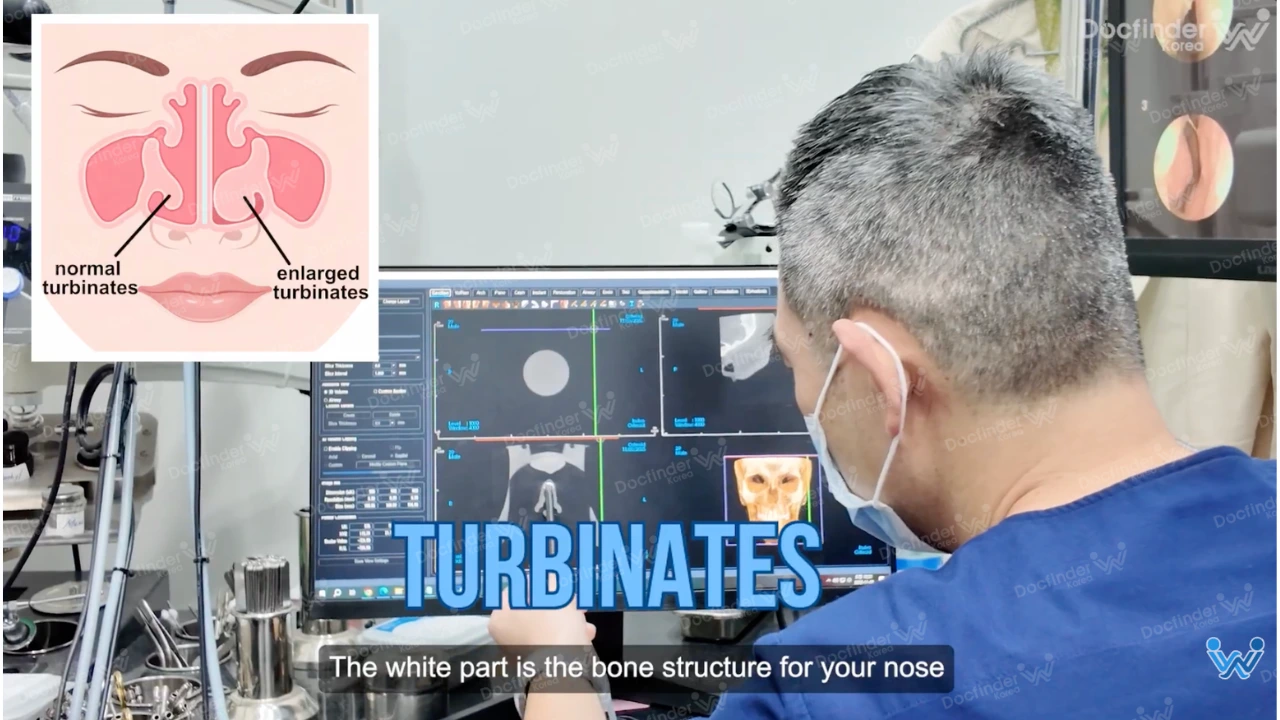
More importantly, Ricardo suffered from severe structural breathing difficulties. He had been diagnosed with a severely deviated septum and enlarged internal tissues called turbinates, which caused major breathing issues during exercise and disrupted his sleep.
Before choosing to travel abroad, Ricardo sought a medical quote within California. However, he discovered that domestic healthcare costs for a combined functional and cosmetic rhinoplasty were exceptionally high.
Seeking a better option, Ricardo chose to trust Docfinderkorea—a decision made easily since his wife had previously achieved outstanding, lasting results through their services.
The Comprehensive Surgical Plan
Upon arriving in Seoul, Ricardo underwent high-resolution 3D CT scanning, which revealed a substantial nasal deviation curved sharply to the left. This structural shift severely narrowed his left nostril airway, causing his internal turbinate tissues to swell and alternate congestion every six hours.
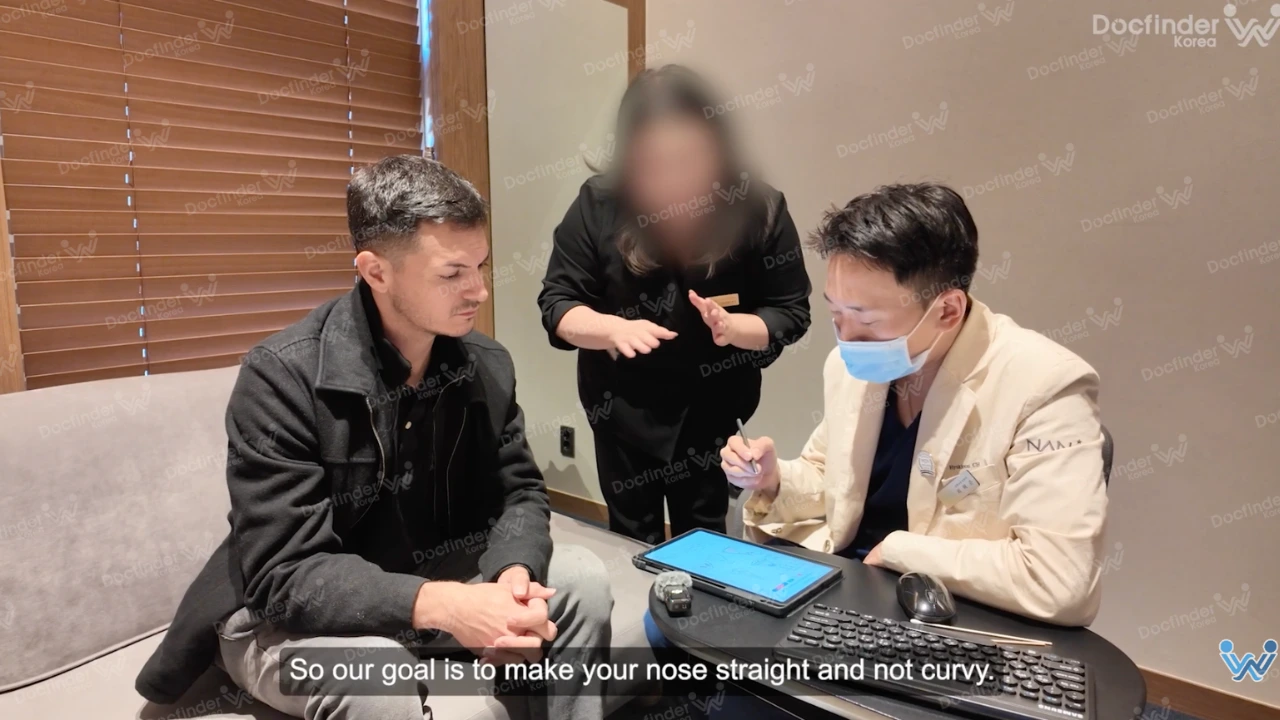
To address these issues, his specialists designed a comprehensive, multi-step surgical plan:
1. ENT Stage ──> Shave & straighten the bent internal septum cartilage.
2. Rhinitis Stage ──> Reduce swollen turbinate tissue & push outward to clear airways.
3. Aesthetic Stage──> Shave the prominent dorsal hump to straighten the bridge.
4. Tip Sculpting ──> Use autologous cartilage to lift and refine the drooping tip.
The Recovery Experience
On his surgery day, Ricardo felt completely at ease, knowing he was supported by his dedicated coordinator and an elite medical team. The specialized ENT surgeon successfully straightened his internal septum and opened his airways, completely resolving his chronic congestion.
Immediately following, the plastic surgeon smoothed his profile hump and lifted his drooping tip using natural cartilage, creating a balanced, masculine profile without requiring synthetic silicone implants.
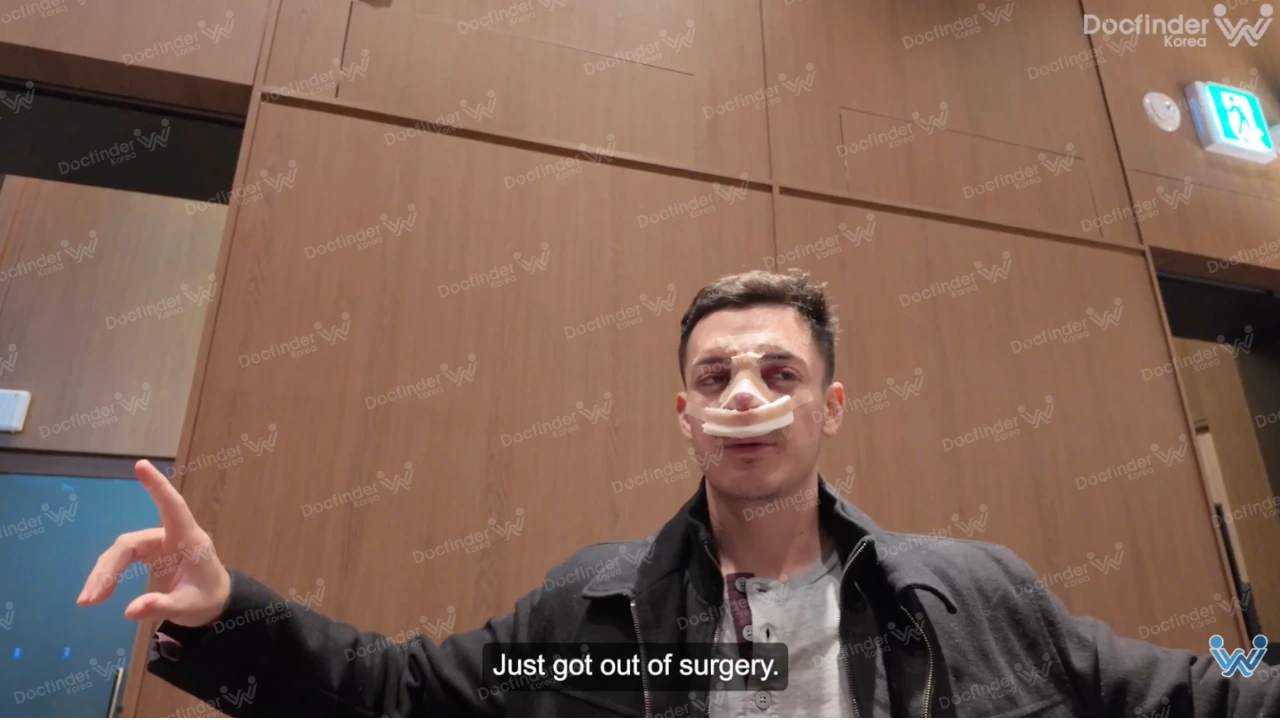
When Ricardo woke up from anesthesia, he reported feeling no nausea and minimal discomfort. While he experienced minor pressure from the internal nasal packing, he felt safe and well-cared for, guided by the personalized aftercare instructions provided by his Docfinderkorea concierge team.
6. Comprehensive Structural FAQ
Q1: What are the primary types of nose jobs available in South Korea for international patients?
South Korea’s top rhinoplasty centers categorize procedures by specific anatomical objectives rather than using a single, uniform approach. The primary options include Augmentation Rhinoplasty to elevate flat bridges, Hump Nose Correction to smooth profile irregularities, Bulbous Nose Refinement to slim a rounded tip, and Short Nose Correction to extend an upturned profile.
Additionally, Functional Rhinoplasty is widely performed to correct internal structural deviations while simultaneously enhancing the nose's appearance. Each approach focuses on achieving overall facial harmony by balancing the bridge height with the natural angle of the nasal tip using high-quality autologous materials.
Q2: Why is a dual-specialist approach recommended for cases involving a deviated septum?
An asymmetrical or crooked nose profile is rarely just an aesthetic concern; it almost always involves internal structural issues that impair normal breathing. A dual-specialist approach addresses this by having an Otolaryngologist (ENT) first clear internal blockages, such as a deviated septum or swollen turbinates.
Once clear breathing passages are restored, a board-certified plastic surgeon immediately realigns the external bones and refines the profile. This collaborative process ensures that the patient achieves optimal airflow and a beautifully balanced profile in a single surgical session, reducing recovery time and anesthesia exposure.
Q3: How does Docfinderkorea differ from open-market medical booking platforms like Gangnam Unni or Babitalk?
Standard open-market digital apps function primarily as advertising platforms where users browse discounted coupons and manage their bookings independently. In contrast, Docfinderkorea is a premium, full-care agency officially registered with the Ministry of Health and Welfare, providing hands-on professional support.
Instead of navigating an unfamiliar hospital system on your own, you receive direct surgery monitoring, in-person medical translation, and 24/7 post-operative concierge care. We act as your dedicated personal advocates and coordinators in Seoul, ensuring your safety from arrival to discharge with no hidden extra fees added to your official hospital invoice.
Q4: What autologous materials are utilized in modern Korean rhinoplasty, and why are they preferred over L-shaped implants?
Older surgical methods relied heavily on pre-fabricated, L-shaped silicone blocks, which often led to long-term issues like skin thinning, implant visibility, or an unnatural upward pull on the tip. Modern Korean rhinoplasty utilizes a sophisticated two-segment approach, where synthetic materials like soft silicone are used only on the stable nasal bridge bone.
For the dynamic nasal tip, surgeons exclusively harvest autologous tissues, such as your own ear, septal, or high-density rib cartilage. These natural materials integrate smoothly with your body's existing tissue, eliminating the risk of implant rejection and ensuring a natural feel and lifelong durability.
Q5: How long do international patients need to remain in Seoul, and what does the immediate recovery protocol look like?
International medical tourists should plan to stay in Seoul for 10 to 14 days following a rhinoplasty. The first 72 hours are characterized by normal internal swelling and minor congestion while the protective nasal packing is in place; this material is safely removed by specialists on day 2 or 3.
External protective splints and structural stitches are completely removed between days 7 and 10, revealing your new profile. Docfinderkorea supports your healing during this transition by arranging advanced deswelling treatments and light therapies, ensuring you are recovered and comfortable before your flight home.
Final Thoughts: Embarking on Your Personal Transformation
Choosing to undergo rhinoplasty is a deeply personal decision that requires balancing aesthetic aspirations with structural safety. South Korea’s medical community offers an exceptional level of surgical artistry and technical precision, making it a premier destination for facial refinement.
By combining the skill of Seoul's top dual-specialist surgeons with the comprehensive, zero-cost advocacy of Docfinderkorea, you can navigate your transformation with confidence. You are supported by a dedicated team focused on your safety, comfort, and long-term well-being every step of the way.
Recommended Reads
If you found this guide helpful, you may also be interested in our other deep dives into the world of Korean Rhinoplasty:
Why Korean Nose Jobs Are Popular Among International Patients: Understand the global appeal and the "Korean Standard" of aesthetic excellence.
Rhinoplasty in Korea: The Complete Overview: A step-by-step guide on what to expect from your surgical journey in Seoul.
Male Rhinoplasty: Defining the Masculine Profile: Learn about the specific techniques used to create a strong, natural-looking nose for men.
Back